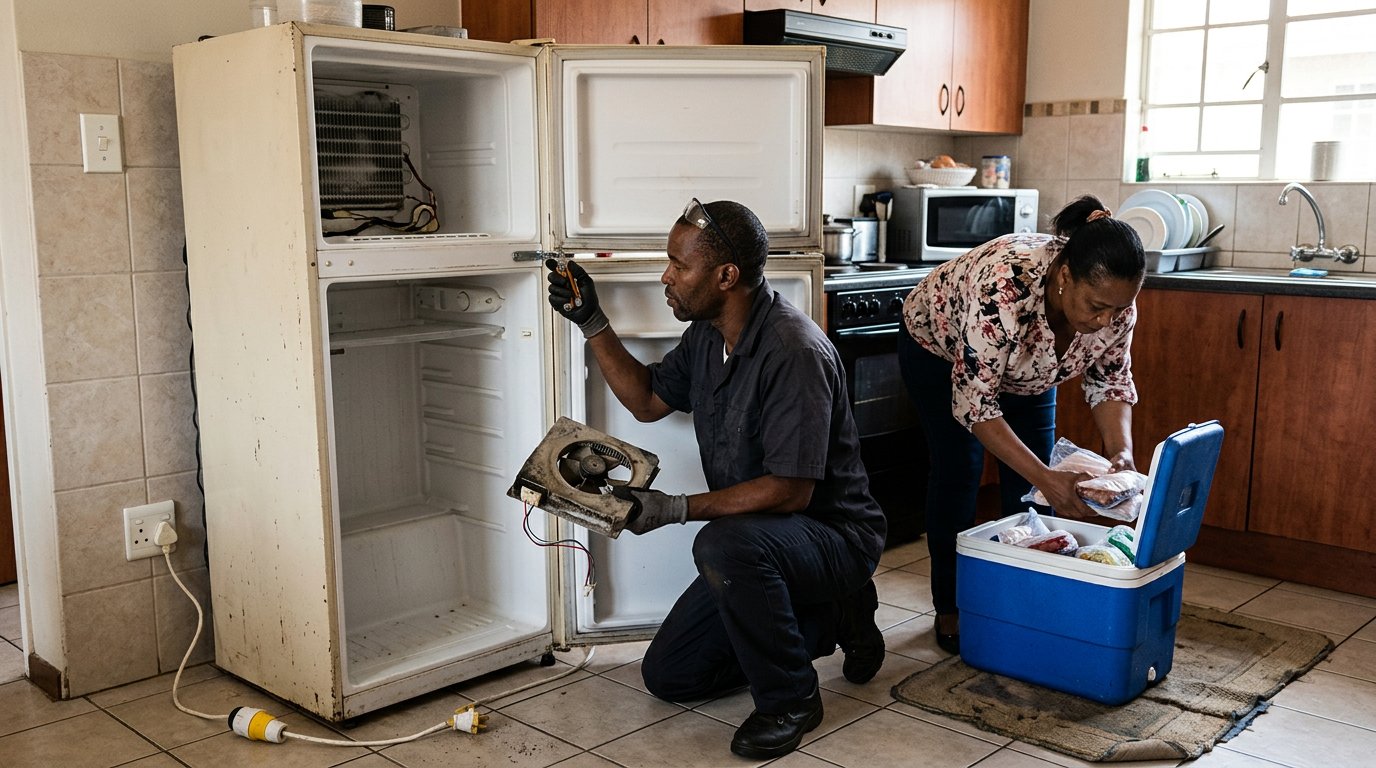
Refrigerator Repair or Replacement: Weigh Cost and Lifespan
Replacing a refrigerator isn’t automatically the cheaper choice. A repair-versus-replace refrigerator cost comparison for 2026 points to a practical rule: repair most faults in units under about 10 years old, but consider replacement when the repair quote reaches at least half the price of a comparable new fridge. Age and the likely cost of further faults matter too.
A fridge that’s warming up, making unfamiliar noises or needing repeated attention can leave you weighing food waste against a costly repair. It’s a common dilemma, and the warning signs deserve as much attention as the quote. This guide explains how to compare repair and replacement costs, factor in refrigerator age and expected lifespan, and spot problems that may mean it’s time to replace the appliance. You’ll also get a straightforward decision guide for judging whether a repair is likely to be worthwhile or whether putting that money towards a replacement makes more sense.
Key Takeaways
- Compare the full repair quote with the cost of a comparable replacement, including the likelihood of further faults.
- Use your fridge’s age and condition to judge how much useful service a repair could realistically restore.
- Spot warning signs such as recurring breakdowns, poor cooling and rising running costs before deciding.
- Follow a simple decision guide to weigh repair value against replacement timing and choose your next step.
Should you repair or replace a refrigerator?
A 2026 comparison of refrigerator repair and replacement costs is most useful when it weighs the repair quote against the full cost of a comparable replacement. Include the fridge’s age, condition and expected running costs before deciding.
Repair and replacement costs
A repair quote covers the diagnosed fault, labour and any parts required; replacement involves buying another appliance. Most faults in fridges under about 10 years old are worth repairing. Consider replacement if the repair quote reaches half the price of a comparable new unit. Repair costs depend on the fault, parts and labour; the exact figure is provided in a quote for your case.
New refrigerator costs by size and type
In South Africa, a new refrigerator’s price depends on its capacity, layout and features. Compare like with like: a compact model is not a fair cost comparison for a larger fridge-freezer. Check that the replacement will fit your available space and meet your storage needs. A manufacturer’s warranty, insurance policy or consumer-protection rights may also apply, depending on their terms and circumstances.
Delivery, installation and removal costs
A replacement’s total cost may include delivery, installation and removal of the old fridge. Add these costs to the purchase price before comparing it with a repair quote. Repair avoids replacing the appliance, but the quoted cost depends on the fault, parts and labour required. Ask for a quotation before work begins so you can compare the options using the full figures.
Energy efficiency and running costs
A lower purchase price doesn’t show what a fridge will cost to run over time. Compare the replacement’s energy information with the existing appliance’s usage and condition. ENERGY STAR notes that refrigerators more than 15 years old can cost more to run. A newer model may reduce running costs, but the difference depends on its efficiency and household use.
| Option | Up-front cost | Best fit | Long-term consideration |
|---|---|---|---|
| Repair | Quote for fault and parts | Under about 10 years old | Possible further faults |
| Replace | Appliance, delivery and installation | Repair quote reaches half of comparable new fridge cost | Energy use and removal |
Use a 2026 refrigerator repair-versus-replacement cost comparison to weigh the repair quote against the replacement’s full cost and likely running costs.
Refrigerator lifespan and replacement timing
A refrigerator’s age helps show how much useful life a repair might restore. Lifespan estimates vary, but fridges typically last 10 to 20 years, depending on type and upkeep. Some can run for 20 years with essential maintenance. Treat those figures as a guide, not a countdown: condition, use and repair history also matter.
Look at the fault alongside the appliance’s age. Ice-maker faults commonly appear in years 1 to 5, while defrost-heater faults commonly appear in years 6 to 10. Compressor or sealed-system failures commonly appear in years 11 to 15. These patterns don’t diagnose a particular fridge, but they help explain why the same repair can carry different value at different ages.
Consider what the repair is likely to achieve, not just which part will be replaced. A local fault in a well-maintained fridge may be worth fixing, while a major failure in an older appliance could be followed by further repair costs. A compressor problem or repeated cooling trouble needs a different assessment from an isolated ice-maker fault. Ask whether the proposed work addresses the underlying cause or only one symptom.
Use this practical age-and-condition check before deciding:
- Note the fridge’s approximate age and any previous repairs.
- Identify whether the fault affects one feature or basic cooling.
- Compare the repair quote with the appliance’s condition and likely remaining service.
- Include recurring faults in your assessment, rather than treating each visit separately.
At the end of its expected lifespan, an expensive repair may offer less value if other parts are also deteriorating. If the fridge is younger and the fault is isolated, repair may preserve useful service. A fridge repair assessment can help clarify the fault and inform that choice.
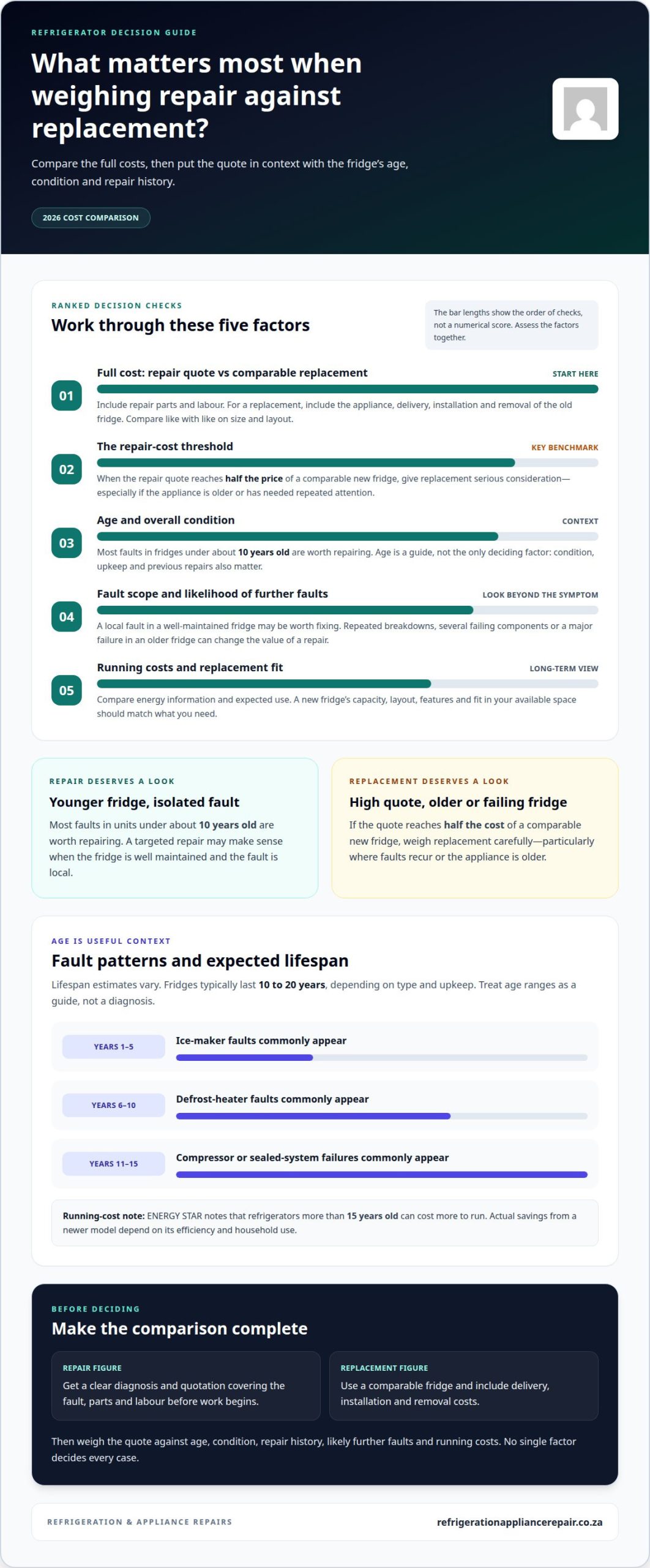
Repair versus replacement decision factors
Age and the repair quote matter, but so do the fault’s scope and the fridge’s overall condition. Weigh these factors together to judge the likely value of repairing or replacing it.
Repair-versus-replacement cost comparison
Compare the full repair quote with the price of a comparable new refrigerator, not a cheaper, smaller model. Include parts and labour in the repair figure. A targeted repair on a well-maintained fridge may be a better use of money than buying new, but recurring faults or several failing components can change the calculation.
Repair-versus-replacement cost threshold
A useful benchmark is the repair quote reaching half the price of a comparable replacement. At that point, replacement deserves serious consideration, especially if the fridge is older or has needed repeated attention. Most faults in units under about 10 years old are worth repairing, but age alone shouldn’t decide. Compare the quote, the appliance’s condition and the chance of further faults before choosing.
A fridge’s brand and design can affect which parts are needed and how practical a repair is. Ask for a clear diagnosis that identifies the fault and the work required. This helps you distinguish a one-off repair from a symptom likely to return because its underlying cause remains.
DIY repairs and professional service
Basic observations can help you describe the problem, but they do not replace a diagnosis. Note whether the fridge is cooling, whether the freezer is affected and when the fault began. Do not attempt repairs that require opening electrical components or the sealed cooling system. An incorrect fix can complicate diagnosis and leave the original fault unresolved.
For a fault involving the compressor, cooling system or repeated breakdowns, professional assessment can identify what needs attention. Use the diagnosis and written quote to compare repair with replacement. If the fridge is under 10 years old and the fault is isolated, repair may be sensible; if the quote reaches half the cost of a comparable new unit, weigh replacement carefully.
Signs a refrigerator should be replaced
A fridge can still run while nearing the point where replacement makes more sense. Look beyond one fault: cooling performance, repeat breakdowns, rising electricity bills and the appliance’s overall condition all help you judge whether a repair is worthwhile.
Start with the food compartment. If it struggles to keep food properly chilled or temperatures fluctuate during normal use, the cooling system needs attention. If the freezer also fails to freeze reliably, the problem may extend beyond a single feature. Repeated trouble with the same symptom is another warning: the underlying cause may remain, or other components may be wearing out.
- Track recurring faults, such as repeated cooling loss after repairs.
- Notice whether the motor runs for long periods without keeping food cold.
- Compare electricity bills over time; ENERGY STAR notes that refrigerators more than 15 years old can cost more to run.
- Look for visible damage, such as a door that no longer seals properly or persistent moisture inside.
A refrigerant leak can reduce cooling, and its source must be found before the system can be restored. On an older appliance, weigh the repair’s scope against the fridge’s age and condition. Do not open the sealed cooling system yourself; incorrect handling can leave the leak unresolved and cause further damage.
Replacement deserves serious consideration when poor cooling continues, several faults appear together, or the repair quote reaches half the price of a comparable new fridge. Reduced efficiency is also associated with units aged 16 years or more. These signs don’t mean every older model has failed, but they make a fresh repair-versus-replacement comparison worthwhile.
If cooling problems or a suspected leak need diagnosis, arrange a fridge repair assessment before deciding.
Access Refrigeration & Appliance Repairs
Access Refrigeration & Appliance Repairs can assess a faulty fridge and help you weigh repair against replacement. An on-site diagnosis identifies the problem and the work needed, giving you practical information for comparing the repair quote with a suitable new appliance. Turn to the team when cooling problems persist, a fault keeps returning or you need a clear assessment before deciding.
The business also handles dishwasher repairs, freezer repairs and washing machine repairs. Work is backed by a six-month guarantee on supplied replacement parts and workmanship. If you accept the quotation, the call-out fee is free.
Choose your next step with confidence
Before committing to a repair or replacement, write down the symptoms, when they began, how often they return and what the diagnosis says. Then compare the repair quotation with the cost of a replacement that suits your household, including relevant delivery, installation and removal costs. This gives you a clear basis for deciding and helps prevent urgency from driving the choice.
Use the repair-versus-replace refrigerator cost comparison for 2026 as a framework, not a substitute for understanding your own appliance. The right option should make sense for its condition, your needs and the work involved. If the fault is unclear or cooling remains unreliable, an assessment can help you take the next step with better information.
Contact Access Refrigeration & Appliance Repairs to discuss the fridge problem and arrange an assessment. A clear diagnosis can help you move forward with confidence.
Frequently Asked Questions
How Long Does a Refrigerator Last?
Most refrigerators last about 10 to 20 years, depending on type and upkeep. Some can run for 20 years with essential maintenance, but that isn’t a promise for every appliance. A practical way to judge yours is to consider its cooling performance, repair history and overall condition alongside its age. A fridge that still works reliably may remain useful longer than one with recurring faults.
Does the refrigerator’s age change the answer?
Yes. Age affects how much useful service a repair might restore, but it doesn’t decide the outcome alone. Most faults in refrigerators under about 10 years old are generally worth repairing. For an older fridge, recurring problems or a major fault make the likely benefit of repair more important to weigh. Compare the diagnosis, condition and repair history rather than replacing an appliance solely because it has reached a particular age.
What is the 50 percent rule for appliance repair?
The 50 percent rule suggests considering replacement when a repair quote reaches at least half the cost of a comparable new appliance. It’s a decision benchmark, not an automatic instruction to replace. Compare like with like: a fridge of similar capacity and type, with delivery and installation included in the replacement total. Then factor in the appliance’s condition and whether the repair addresses the underlying fault.
What’s worth fixing, and what isn’t?
An isolated fault in a fridge that is otherwise in good condition may be worth fixing, especially if the repair restores reliable cooling. Recurring problems, several faults or a major compressor or sealed-system failure call for a closer cost comparison. A faulty feature that leaves the main cooling system working is different from a fridge that cannot keep food cold. Use the diagnosis to understand what the repair will resolve before deciding.
What is the average refrigerator lifespan in South Africa?
A practical planning range is about 10 to 20 years, depending on the refrigerator type and upkeep. This is a broad lifespan range, not a guaranteed service period for every model or household. Usage, maintenance and repair history all affect how long an appliance remains dependable. A South African household can use the range as context, then judge its own fridge by performance and condition.
When is it cheaper to repair versus replace a refrigerator?
Repair is generally cheaper when the fault is isolated, the appliance is in sound condition and the repair quote is well below a comparable replacement’s full cost. This is more likely to make sense for a fridge under about 10 years old. Replacement deserves consideration as repair costs approach half the price of a similar new model, especially if faults keep returning.