Search for:
Washing Machine Repair in Johannesburg: What Home Service Covers

A washing machine fault doesn’t always mean the appliance needs replacing. Washing machine repair in Johannesburg typically begins with an on-site inspection to identify the cause, followed by an explanation of the recommended work and repairs to affected parts where possible. The right approach depends on the symptoms and the machine’s condition.

A washer that won’t drain, spin or start can quickly disrupt your household, and it isn’t always obvious whether the cause is a simple issue or a failed component. This article explains what a home repair visit can involve, which warning signs need attention and what details to have ready when arranging a repair. Get a practical overview of the process, from describing the fault to understanding the proposed work.

Key Takeaways

  • A home repair visit starts by assessing the washer’s symptoms and identifying what may be causing the fault.
  • Make a note of when the problem occurs and what the machine does, so you can describe the fault clearly.
  • Leaks, unusual noises or a washer that won’t start, drain or spin can help indicate when to contact a repair service.
  • Knowing what the repair process covers can help you understand the recommended work before deciding how to proceed.
Washing Machine Repair in Johannesburg: What Home Service Covers

Washing machine repair Johannesburg

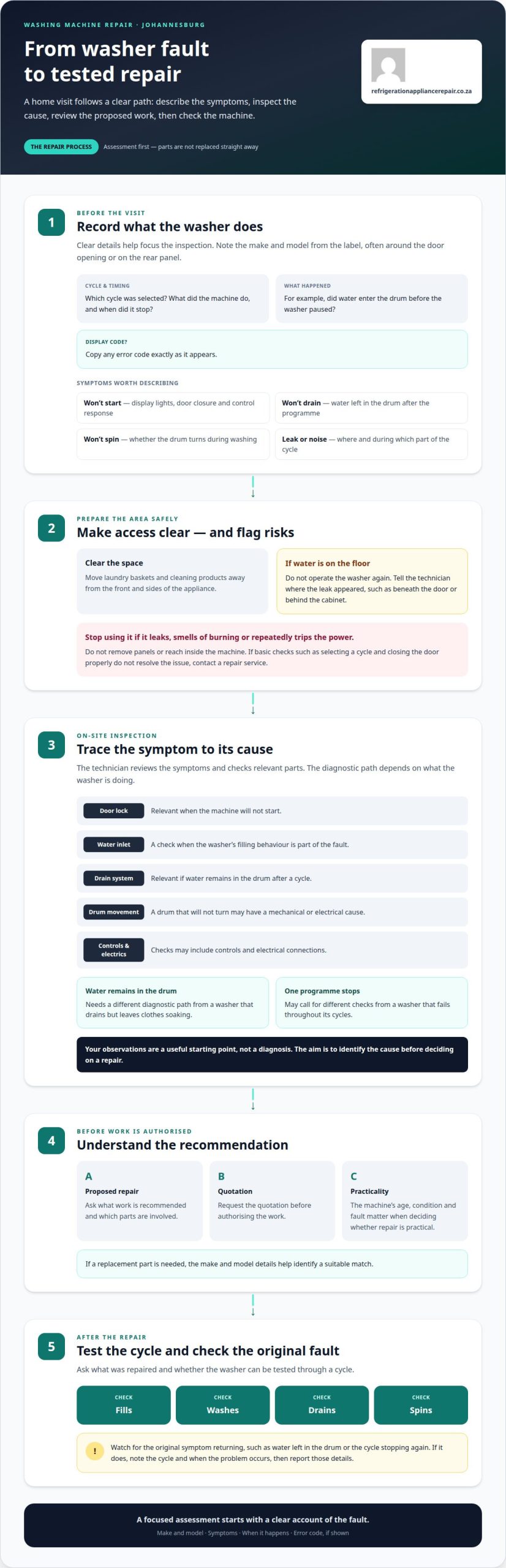
A repair visit starts by understanding the washer’s symptoms, not by replacing parts straight away. For washing machine repair in Johannesburg, the technician needs to know when the fault occurs and whether it affects one cycle or every load. A machine that fills but won’t spin calls for different checks from one that won’t start. Clear details help focus the inspection and repair.

Before the visit, note the make and model from the appliance label, often around the door opening or on the rear panel. Record the selected cycle, what the washer did and when it stopped. For example, note whether water entered the drum before the machine paused. If the display shows an error code, copy it exactly.

The technician can review the symptoms and inspect the relevant parts. Depending on the fault, checks may cover the door lock, water inlet, drain system, drum movement, controls or electrical connections. A washer that remains full after a cycle needs a different diagnostic path from one that drains but leaves clothes soaking. The aim is to identify the cause before deciding on the repair.

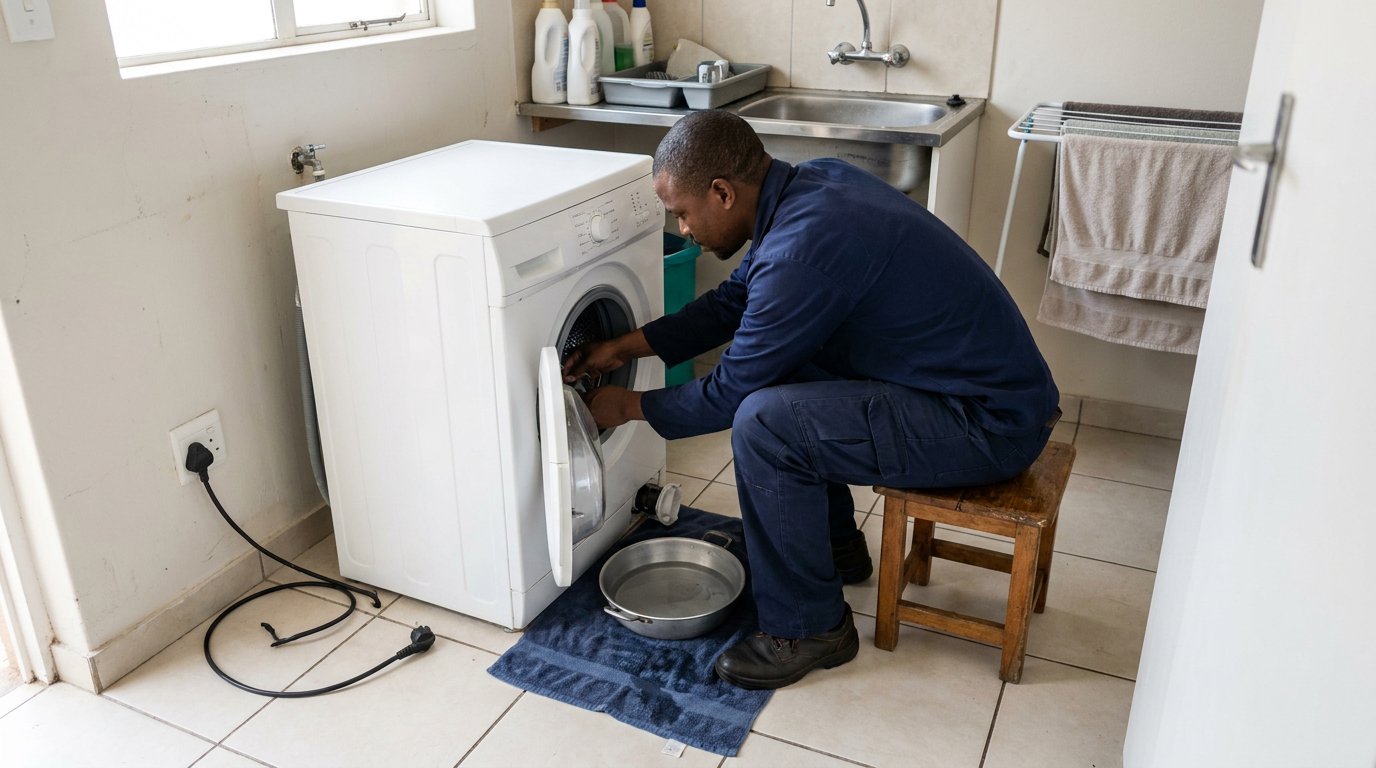
Keep the area around the appliance clear. Move laundry baskets and cleaning products away from the front and sides so the machine is accessible. If water is already on the floor, don’t operate the washer again. Tell the technician where the leak appeared, such as beneath the door or behind the cabinet. This can help guide the inspection.

Common symptoms worth describing include:

  • No start: Say whether the display lights up, the door closes, or the controls respond.
  • No drain: Note if water remains in the drum at the end of the programme.
  • No spin: Describe whether the drum turns during washing but stops before the final spin.
  • Leak or noise: Identify when it happens and whether the sound comes during filling, washing or draining.

These observations aren’t a diagnosis, but they give the repairer a useful starting point. An inspection can help distinguish a component fault from an operating issue. For example, a drum that won’t turn may have a mechanical or electrical cause. A washer that stops during one programme may need different checks from one that fails throughout its cycles.

After identifying the fault, the repairer should explain the recommended work and any parts involved. Ask for the proposed repair and quotation before authorising the work, so you can make an informed decision. If a replacement part is needed, the model details help identify a suitable match. The machine’s age, condition and fault also matter when deciding whether repair is practical.

Once the work is complete, ask what was repaired and whether the washer can be tested through a cycle. A test can show whether it fills, washes, drains and spins as expected. Check whether the original symptom returns, such as water remaining in the drum or the cycle stopping again. If it does, note the cycle and when the problem occurs, then report those details.

Contact a repair service if basic checks, such as selecting a cycle and closing the door properly, don’t resolve the issue. Stop using the washer if it leaks, produces a burning smell or repeatedly trips the power. Don’t remove panels or reach inside the machine. When arranging a visit, share the model, symptoms and any displayed error code to help the technician prepare for a focused assessment.

Access Refrigeration & Appliance Repairs: Fridge Repairs

Access Refrigeration & Appliance Repairs provides on-site washing machine repairs when a fault interrupts normal use, from a washer that won’t drain to one that stops mid-cycle. Note the symptoms and model details before arranging a visit. Explain what the machine does, when the problem occurs and whether an error code appears. This information helps the technician assess the appliance at home.

Access Refrigeration & Appliance Repairs also repairs fridges, freezers and dishwashers, so you can get help with other household appliance faults through the same business. Contact the team to discuss your washing machine repair.

Get the next load back on track

A washer that keeps interrupting its cycle can make laundry a recurring problem. Arrange an assessment to find the cause and understand the repair options. For washing machine repair in Johannesburg, have the appliance’s make and model ready, along with a clear description of what happens. These details give the repairer a useful starting point for discussing the next step.

If your machine still isn’t working properly, contact Access Refrigeration & Appliance Repairs to discuss the fault and arrange an on-site repair visit. The business also repairs fridges, freezers and dishwashers. Describe the symptoms and ask about the recommended work before deciding how to proceed.

Take the next step at a pace that suits your household. Contact Access Refrigeration & Appliance Repairs to discuss your washing machine fault and get the conversation started.
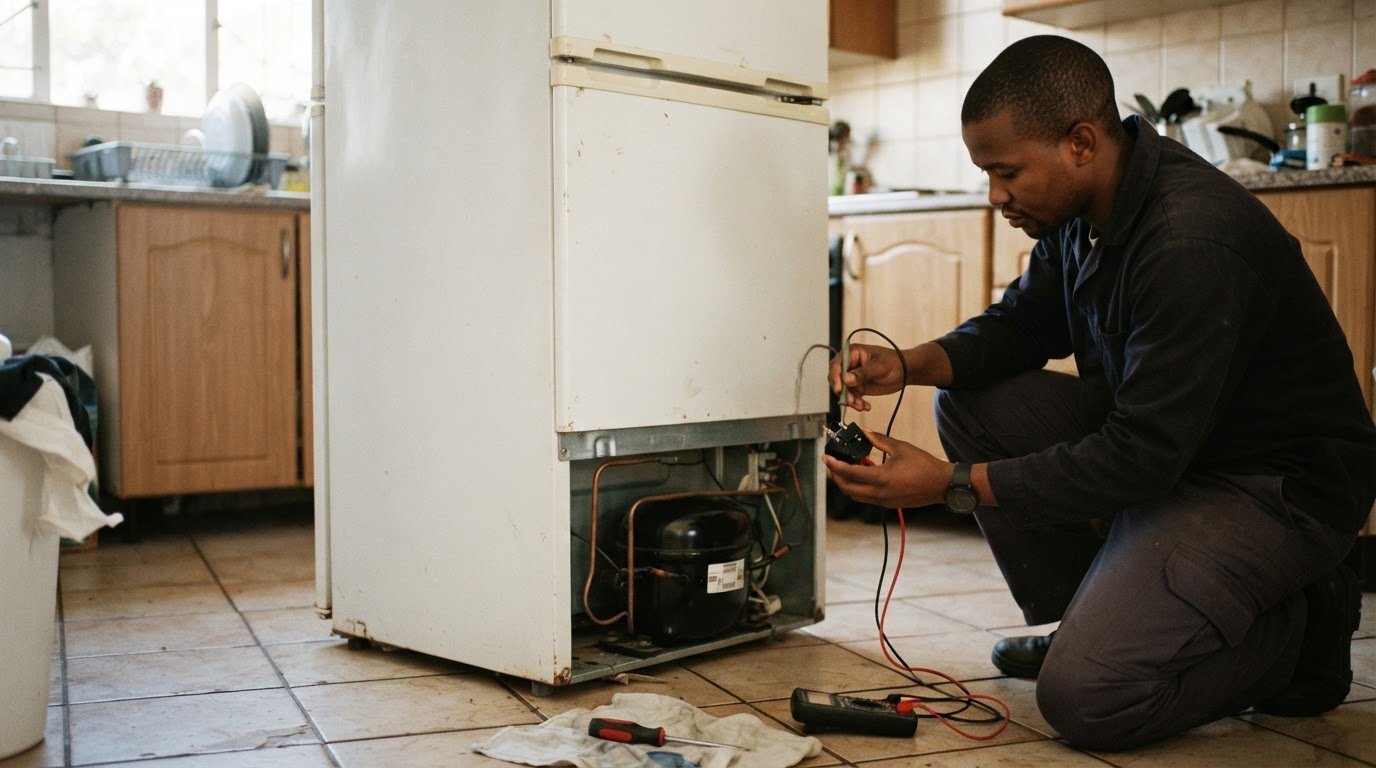
A technician checks a fridge’s compressor start relay during a Johannesburg home repair.
Samsung Fridge repair in Johannesburg for cooling and electrical faults

A fridge that runs but won’t stay cold may have a cooling, temperature-control or airflow fault; electrical problems can also stop it working properly. Fridge repair in Johannesburg can address these issues in household and commercial fridges and freezers, depending on the fault and the appliance’s condition. The first step is identifying what has changed, from warm food and uneven temperatures to unusual noises or a unit that won’t power on.

It’s stressful when a fridge or freezer can’t keep food at a safe temperature, especially when you rely on it every day. Similar symptoms can have different causes: restricted airflow, a faulty thermostat or a power issue may all affect cooling.

This article covers common cooling and electrical faults, what a repair assessment involves, and what can affect the work required. You’ll also learn what to note before arranging a repair, so you can describe the problem clearly and know what to expect next.

Key Takeaways

  • Note whether the fridge is warm, making unusual noises or failing to switch on; these symptoms help distinguish cooling faults from electrical problems.
  • Domestic fridges and commercial refrigeration equipment serve different needs, so the appliance type and how it’s used matter when assessing a fault.
  • Check for blocked airflow, poor door sealing and uneven temperatures, as these can help explain why cooling is inconsistent.
  • Share what the appliance is doing and when the problem started to help guide the repair assessment.

Common fridge and freezer faults

A fridge can run continuously yet leave milk warm or vegetables limp. A damaged door seal, blocked vents or crowded shelves can disrupt cold-air circulation. Frost building up inside a freezer may point to a defrost or airflow problem. Water beneath the drawers can result from a blocked drain, while clicking without starting can indicate an electrical or starting fault. These symptoms help guide diagnosis, but they don’t identify the failed part on their own.

Do Johannesburg fridge repair services offer same-day or emergency repairs? Same-day repair services are advertised in Johannesburg, but emergency response depends on the service and its schedule. When booking, explain whether the fridge has stopped cooling completely or the freezer is also affected. A unit that has lost power needs a different assessment from one that runs but stays warm.

Which fridge brands do Johannesburg repair technicians service? Brand coverage varies with the technician’s experience, appliance model and parts required. Give the make and model from the label inside the fridge or near its door. That information helps identify the appliance before a visit.

Do fridge repair companies in Johannesburg offer warranties on parts and labour? Check what the guarantee covers and how long it lasts. Access Refrigeration & Appliance Repairs provides a six-month guarantee on supplied spares and workmanship. Keep the repair documentation with the appliance details.

How can I find a reputable, qualified fridge repair technician in Johannesburg? Look for a clear diagnostic process, an itemised quotation and written terms for parts and workmanship. The technician should explain the fault found, the proposed repair and any parts involved. Before agreeing to the work, make sure you understand its scope.

What should I check before booking a fridge repair in Johannesburg? Note the make and model, when the fault started, and whether the lights, motor or display still work. Safely check the plug and household socket, and report any burning smell or repeated tripping. Don’t dismantle electrical components.

Do technicians service Sandton, Randburg and Soweto? Coverage depends on the service area; give the suburb and nearest landmark when arranging a visit. This helps establish whether the address falls within the Johannesburg operating area.

Domestic and commercial refrigeration

A household fridge usually stores food for one family, while commercial equipment supports daily trading. A restaurant may rely on a preparation fridge, display cabinet and freezer at once. A small shop might use a drinks cooler beside its food-storage fridge. Each unit has a different role, so describe what it stores and how often staff open it.

Commercial equipment can face heavier use than a domestic appliance. Frequent door openings, regular restocking and warm kitchens can affect how consistently a unit cools. A display fridge in a busy shop also has different demands from a household fridge that stays closed for longer periods. These usage details help distinguish an equipment fault from operating conditions.

  • Domestic fridges: note whether the issue affects the fridge compartment, freezer compartment or both.
  • Chest and upright freezers: describe the stored goods and whether frost or temperature changes are visible.
  • Display cabinets: report which section or shelf appears affected, and whether the problem continues during quieter periods.
  • Cold rooms: explain how the space is used and whether the fault affects the whole room or one area.

Before arranging an assessment, make a simple equipment list. Include each appliance’s make, model and location, such as “upright freezer in the storeroom”. At a commercial site, note when the problem appears: during restocking, after repeated door use, or throughout the day. These observations help the technician understand the operating environment and assess the right unit.

Keep access clear around the appliance and its controls. For a cold room, clear the entrance and identify any separate cooling equipment nearby. In a shop or kitchen, tell staff which unit needs attention so they can explain its normal use. Avoid moving stored goods into another unit if that would block its airflow.

For equipment serving a business, record the affected unit and its role before arranging refrigeration repair. Clear details help focus the assessment on the appliance, its workload and the areas affected.

Samsung Fridge repair in Johannesburg for cooling and electrical faults

Fridge cooling and temperature problems

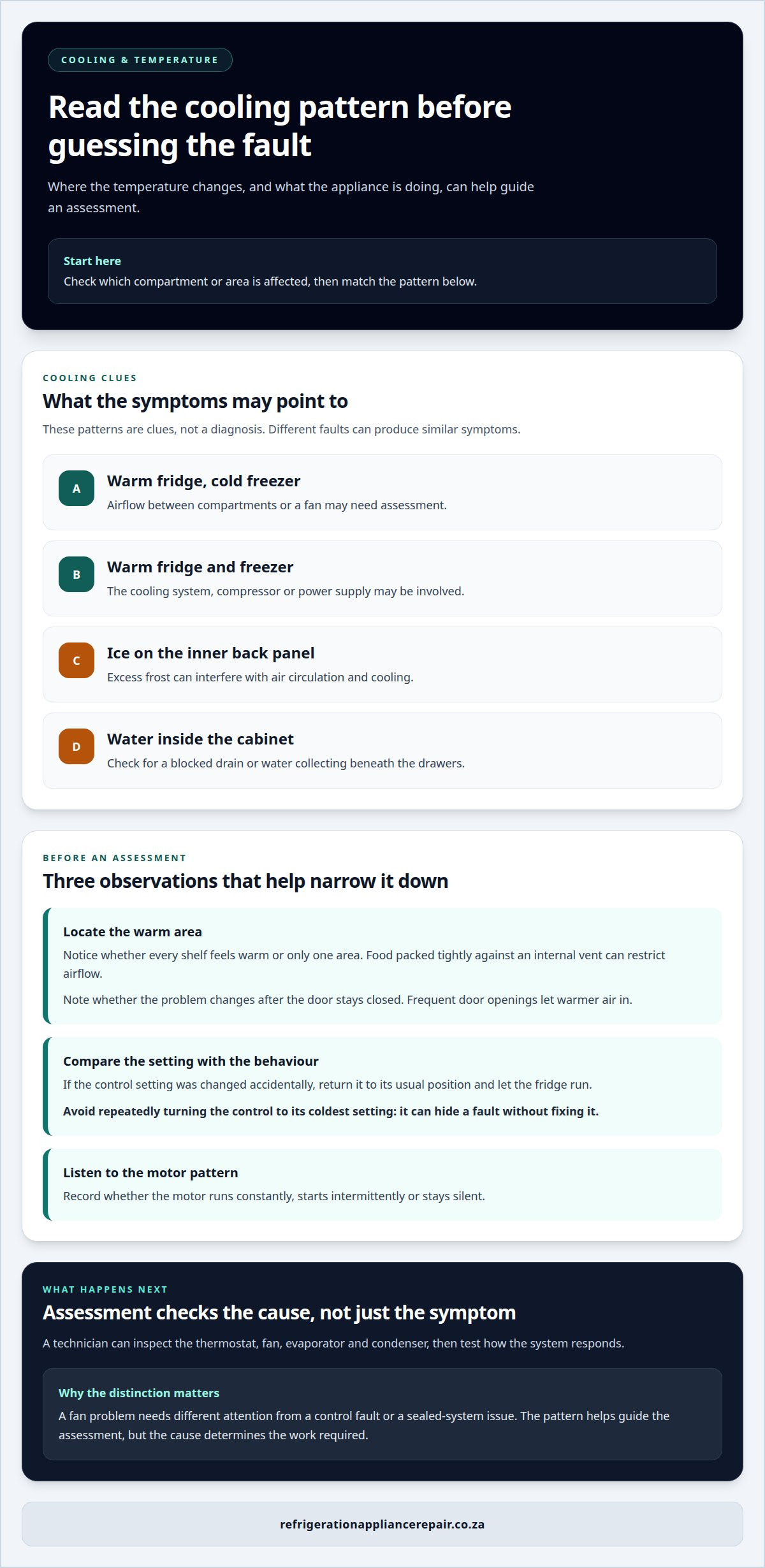
A fridge that cools unevenly needs a closer look than its display setting. Check whether every shelf feels warm or only one area does. Food packed tightly against an internal vent can restrict airflow, while frequent door openings let warmer air in. Note which compartment is affected and whether the problem changes after the door stays closed.

Next, compare the control setting with the fridge’s actual behaviour. If the setting was changed accidentally, return it to its usual position and let the fridge run. Don’t keep turning the control to its coldest setting: that can hide a fault without fixing it. Record whether the motor runs constantly, starts intermittently or stays silent.

  • Warm fridge, cold freezer: airflow between compartments or a fan may need assessment.
  • Warm fridge and freezer: the cooling system, compressor or power supply may be involved.
  • Ice on the inner back panel: excess frost can interfere with air circulation and cooling.
  • Water inside the cabinet: inspect for a blocked drain or water collecting beneath drawers.

These patterns are clues, not a diagnosis. A technician can inspect the thermostat, fan, evaporator and condenser, then test how the system responds. The cause matters: a fan problem needs different attention from a control fault or sealed-system issue. Share the symptoms and any changes you noticed after adjusting the controls.

Before arranging fridge repair in Johannesburg, clear items away from the internal vents and check that containers aren’t stopping the door from closing. Look for a visible gap around the seal, but don’t remove panels or handle wiring. Keep the make and model handy, and note when cooling changed. These details help focus the assessment instead of relying on a single warm shelf.

Fridge electrical issues

Does the fridge have no lights, no display and no motor sound? Start by checking the plug and wall socket. See whether another appliance works from that socket, then inspect the fridge’s power lead for visible damage. Don’t touch exposed wires or remove electrical covers. If the socket works but the fridge stays off, the fault may involve its internal wiring, control board or power components.

A fridge that repeatedly switches off may have a different fault. A damaged thermostat may interrupt operation, while a failing start relay can prevent the compressor from starting. Listen for repeated clicking, note whether the interior light stays on, and record when the appliance stops. These details help distinguish a control fault from an interruption in the household power supply.

  • No interior light: check the socket and plug, then report whether the display also remains blank.
  • Repeated clicking: note how often it happens and whether the compressor starts afterwards.
  • Power trips when switched on: stop resetting the circuit and arrange an assessment.
  • Burning smell or visible sparks: keep away from the appliance and seek professional attention.

Electrical diagnosis can involve the supply connection, wiring, thermostat, start relay, control board and compressor circuit. A technician tests relevant components to locate the interruption rather than replacing parts by guesswork. Explain what happened just before the fault, such as a power cut, a socket change or a sudden shutdown.

Before arranging a visit, note the make and model, the symptoms, and whether the socket powers another appliance. Keep the fridge accessible, but leave internal panels and wiring untouched. If the circuit trips or you notice a burning smell, don’t continue switching the fridge on. For an electrical fault affecting your fridge, arrange a fridge repair assessment and share those observations.

Access Refrigeration & Appliance Repairs: Fridge Repairs

Access Refrigeration & Appliance Repairs carries out on-site fridge repairs for cooling and electrical faults. Arrange a repair if your fridge runs without cooling, switches off unexpectedly or won’t power on. Share the make and model, the symptoms and when they began to help the technician assess the problem.

The repair process starts with identifying the fault and explaining the proposed work. If you accept the quotation, the call-out is free. Repairs are backed by a six-month guarantee on supplied spares and workmanship. The service also covers freezer repairs if a separate freezer develops a fault.

For a fridge that isn’t cooling or has an electrical fault, contact Access Refrigeration & Appliance Repairs or visit refrigerationappliancerepair.co.za.

Take the next step towards a working fridge

A clear account of what the appliance is doing gives the repair assessment a useful starting point. Before arranging help, note when the fault began, whether it changes and which compartments are affected. Include the make and model, along with any clicking, shutdowns or unusual smells. For fridge repair in Johannesburg, these observations help explain the problem without relying on guesswork.

Access Refrigeration & Appliance Repairs handles fridge, freezer and dishwasher repairs. Choose the service for the appliance causing trouble, and describe the symptoms when you get in touch. If the fault involves a fridge’s cooling or electrical system, include what you’ve observed and avoid opening electrical panels.

Ready to discuss the repair? Contact Access Refrigeration & Appliance Repairs and share the appliance details. A practical first step can make it easier to get the right fault assessed and move towards a working fridge again.

Frequently Asked Questions

Which fridge repair companies serve Johannesburg and nearby suburbs?

Access Refrigeration & Appliance Repairs provides on-site appliance and refrigeration repairs in Johannesburg and nearby areas. Its coverage includes Sandton, Randburg, Alberton, Edenvale, Benoni, Boksburg, Centurion, Roodepoort, Germiston, Kempton Park, Springs and Midrand, as well as Pretoria, Pretoria-east, Pretoria-North, Waterkloof, Vanderbijlpark, Vereeniging and Meyerton. Give your suburb and appliance type when arranging a visit.

What are common signs a fridge needs professional repair rather than troubleshooting?

Arrange a professional repair if a basic adjustment doesn’t fix the problem, or the fault returns after the fridge briefly works normally. Repeated circuit trips, a damaged power lead or a burning smell also need professional attention. Internal wiring and cooling-system work require specialist assessment. Don’t remove panels or attempt refrigerant work; note the symptoms and any simple checks you’ve tried.

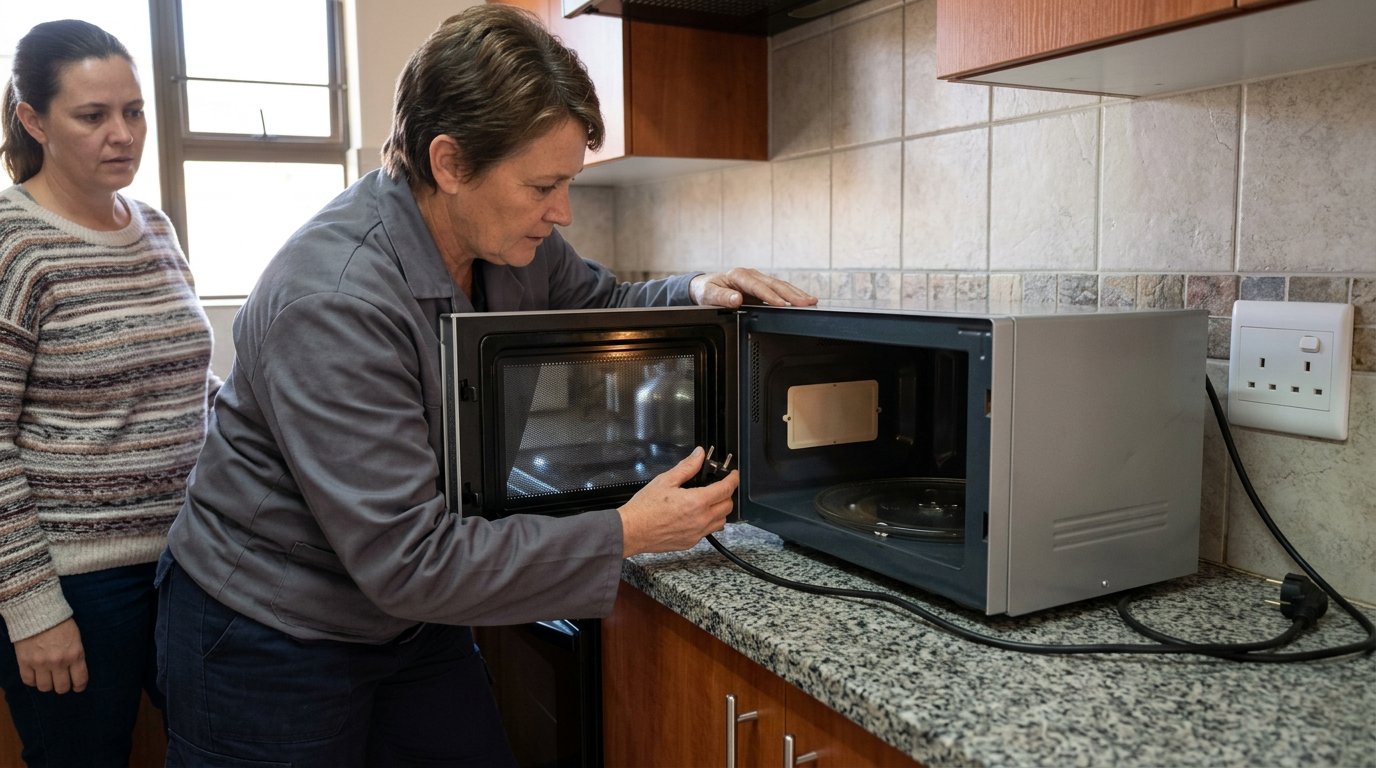
Technician safely diagnoses an unplugged microwave that has stopped heating in a Johannesburg kitchen
Oven Repair Near You: Safe Troubleshooting Advice

A microwave that stops heating, makes unusual noises or loses power needs a proper diagnosis before anyone can choose the right repair. If you’re searching for microwave repair near you, note what the appliance does and when the problem occurs. Stop using it if you notice smoke, sparks or a burning smell.

A breakdown can disrupt meals and leave you unsure whether the fault is simple or needs a technician. Don’t open the casing or work on internal components. Describing the symptoms clearly is a safer, more useful first step.

This guide explains how microwave faults are assessed, which repairs and genuine manufacturer parts may be involved, and what to look for in a repair guarantee. You’ll also learn which observations can help with diagnosis, what can affect the repair quote, and when professional help is the sensible next move.

Key Takeaways

  • Record when the microwave fault happens and what you notice; these details can help narrow down the cause.
  • Learn why the correct manufacturer part matters and how the repairer identifies a suitable replacement.
  • Understand the difference between a fault diagnosis and the repair itself before approving the work.
  • Check which supplied parts and workmanship a repair guarantee covers, and keep the terms for reference.

Fault diagnosis

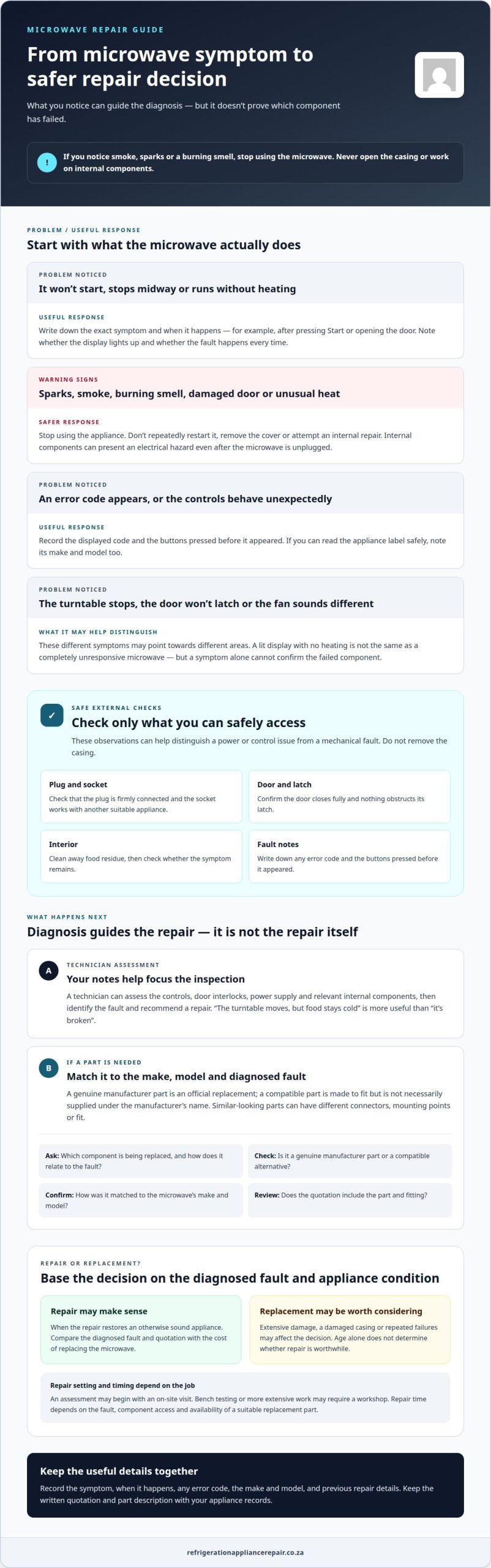
A useful diagnosis starts with the exact symptom, not a guess about the faulty part. Note whether the microwave won’t start, runs without heating, stops midway or displays an error code. Record when the fault appears, such as after pressing Start or opening the door. If you can read the appliance label safely, include its make and model.

Microwave safety risks need prompt attention. Stop using the appliance if you see sparks or smoke, smell burning, notice a damaged door or feel unusual heat around the casing. Don’t remove the cover: internal components can present an electrical hazard, even after the microwave is unplugged.

Before arranging professional diagnosis, make only safe external checks:

  • Check that the plug is firmly connected and the socket works with another suitable appliance.
  • Confirm the door closes fully and nothing obstructs its latch.
  • Clean food residue from the interior, then check whether the symptom remains.
  • Write down any displayed code and the buttons pressed before it appeared.

These observations can help distinguish a power or control issue from a mechanical fault. A lit display with no heating, for instance, differs from a completely unresponsive appliance. A turntable that stops, a door that won’t latch or a fan that sounds different may each point to a different area. The symptom alone doesn’t prove which component has failed.

A technician can assess the controls, door interlocks, power supply and relevant internal components. They’ll use your description to guide the inspection, identify the fault and recommend a repair. Be specific: “the turntable moves, but food stays cold” gives more useful information than “it’s broken”. Don’t repeatedly restart a microwave that sparks or smells burnt. Clear notes help focus the assessment and base the repair decision on the fault.

Genuine manufacturer parts

A replacement part must match the microwave’s make and model, not merely look similar. The model label helps identify the appliance version, while a part number can narrow down the component needed. Share these details when arranging a repair if you can access them without moving or opening the microwave.

A genuine manufacturer part is an official replacement supplied for that appliance. A compatible part is made to fit, but isn’t necessarily supplied under the microwave manufacturer’s name. The repairer needs to establish that the part is suitable for the specific model and will fit and function correctly.

For example, door latches, control panels and turntable motors can have different specifications across models from the same brand. A similar-looking part may have a different connector, mounting point or fit. The technician should match the replacement to the appliance details and diagnosed fault, not choose by appearance alone.

Before approving a repair, ask the technician to explain the proposed part type. Useful details include:

  • The component being replaced and how it relates to the diagnosed fault.
  • Whether it’s a genuine manufacturer part or a compatible alternative.
  • How the part is matched to the microwave’s make and model.
  • Whether the repair quote includes the replacement part and fitting.

Keep the written quotation and any part description with your appliance records. If the microwave has been repaired before, share the details: an earlier component replacement may help explain recurring symptoms. Don’t try to fit internal parts yourself, as opening the casing can expose hazardous components.

For a fault that needs a correctly matched replacement and professional fitting, microwave repair support can be the next practical step. Clear model details and a description of the problem help the repairer assess the job and explain the proposed part before work proceeds.

Oven Repair Near You: Safe Troubleshooting Advice

Microwave fault repairs

Once the fault is diagnosed, the repair plan depends on the failed component and the microwave’s condition. The work setting, time required and whether repair is worthwhile also matter.

Microwave repairs may start with an on-site visit, where the technician assesses the appliance and identifies the fault. If the work requires bench testing or more extensive attention, the microwave may need to go to a workshop. The fault and checks required determine the appropriate setting.

Weighing repair against replacement

Is an older microwave worth repairing? Compare the diagnosed fault, the condition of the door and controls, and the repair quotation with the cost of replacing the appliance. A damaged casing or repeated failures may affect the decision. Repair can make sense when it restores an otherwise sound appliance; extensive damage may point towards replacement. Decide based on the specific fault, not age alone.

Understanding repair times

How long does microwave repair usually take? It depends on the fault, how accessible the component is and whether a suitable replacement part is available. A straightforward adjustment takes different work from replacing a control component or carrying out further testing. After inspection, the technician can explain the steps, including any testing needed after fitting a part. Ask what work is planned and what could extend it.

Preparing the microwave for a technician

Before the appointment, unplug the microwave if the plug is safely accessible and there’s no immediate hazard. Clear the counter and remove food, the glass turntable and loose accessories. Keep the model label accessible and note the symptom, such as a display that lights without heating. Share any error code or previous repair details. Don’t remove the casing or attempt internal repairs.

Which brands do local repair technicians service? Technicians may work on different manufacturers’ models, but the make and model help identify the right repair approach and replacement part. Read the appliance label and provide those details with your fault description. A microwave that runs without heating, for example, needs a different assessment from one that won’t start. The brand helps focus the inspection, but the observed fault guides the repair.

Repair guarantees

A repair guarantee explains what support applies after the work is completed. Check the written terms for the repair covered, the guarantee period, and whether it includes parts, workmanship or both. For example, a guarantee covering a replaced door latch doesn’t necessarily cover every microwave component. Clear terms help you understand what to do if the same fault returns.

Access Refrigeration & Appliance Repairs provides a six-month guarantee on supplied spares and workmanship. It covers the replacement parts supplied and the work carried out, not every possible fault affecting the appliance. Keep the quotation and repair paperwork together so you can easily identify the covered work and guarantee period.

Before approving a repair, look for these details in the quote or guarantee terms:

  • Which microwave fault and repair work the guarantee relates to.
  • Whether the replacement part is included in the cover.
  • When the guarantee period begins and how long it lasts.
  • How to report a problem connected to the completed repair.

Keep the invoice, the technician’s description of the repair and any part details. If the microwave develops the same symptom, describe what has changed and refer to the original repair record. A new fault may involve a different component, so the symptoms and earlier work can help distinguish a recurring issue from a separate problem.

Confirm the call-out arrangement before work starts. The call-out is free when you accept the quotation. Review the proposed repair, its scope and the parts being supplied. Don’t assume the guarantee covers unrelated damage, a later fault or parts that weren’t supplied as part of the repair.

For microwave repair with cover on supplied spares and workmanship, request a repair quotation. Keep the written terms with your appliance records, and use them if a question arises about the completed work.

Access Refrigeration & Appliance Repairs: Fridge Repairs

Access Refrigeration & Appliance Repairs is a practical next step when a fridge fault disrupts food storage or a household appliance stops working. Its fridge repairs address refrigeration problems, while dishwasher, freezer and washing machine repairs cover other common breakdowns.

For a fridge that isn’t cooling properly, note the symptoms and when they began before arranging help. For a dishwasher, freezer or washing machine fault, describe what the appliance does and any unusual sounds or signs. These details help explain the problem clearly and support a focused repair assessment.

For microwave repairs in Johannesburg, Pretoria and surrounding areas, contact Access Refrigeration & Appliance Repairs and describe the fault.

Get your microwave working safely again

A fault that keeps returning can disrupt everyday routines and make a microwave difficult to rely on. Instead of attempting internal repairs, use the symptoms you’ve observed to arrange a professional assessment. Sharing the make, model and behaviour helps turn an uncertain problem into a focused repair enquiry.

If you need microwave repairs nearby, Access Refrigeration & Appliance Repairs can assess the fault and carry out the necessary repair. The team also repairs fridges, freezers and dishwashers when other household appliances need attention.

Contact Access Refrigeration & Appliance Repairs with the appliance details and a short description of what’s happening. Arrange microwave repair support and take a practical step towards getting your kitchen routine back on track.

Frequently Asked Questions

How do I find a reputable microwave repair technician near me?

Choose a technician who explains the fault, proposed work and parts before you approve a repair. Access Refrigeration & Appliance Repairs provides on-site microwave repairs in Johannesburg, Pretoria, Sandton, Alberton, Edenvale, Benoni, Boksburg, Centurion, Roodepoort, Germiston, Vanderbijlpark, Vereeniging, Meyerton, Randburg, Kempton Park, Springs and Midrand. Share the microwave’s make, model and symptoms, then request a clear quotation.

What warranty do microwave repair services provide on parts and labour?

Access Refrigeration & Appliance Repairs provides a six-month guarantee on supplied replacement parts and workmanship. It covers the parts supplied and work carried out, not every component or a separate later fault. Keep your quotation and invoice. If the same issue returns, describe the symptoms and refer to the repair record when contacting the business.

Are microwave repairs covered by warranty or consumer protection laws in South Africa?

The repair service includes a six-month guarantee on supplied replacement parts and workmanship. It doesn’t cover every possible fault affecting the microwave.