Search for:
How to Troubleshoot a Chest Freezer That Won’t Freeze Solid

Start with simple checks before assuming the compressor has failed. Chest freezer not freezing solid troubleshooting begins with the thermostat setting, lid seal and airflow. Clean accessible condenser coils and check the evaporator fan if your model has one. These checks may reveal a fixable cause or show when the freezer needs repair.

Finding food softening in a freezer you rely on is stressful, and it’s reasonable to wonder whether you can fix the problem yourself. You can safely check for blocked airflow, a loose seal or an incorrect setting, but electrical and sealed-system faults need a technician.

This guide takes you through the checks in a practical order, focusing on the thermostat, coils and evaporator fan. You’ll learn what to look for, what to leave alone, and when to stop troubleshooting and arrange a freezer repair.

Key Takeaways

  • Check the thermostat setting and lid seal first; a simple adjustment or poor seal may explain softening food.
  • Clean accessible condenser coils to help remove dust that can affect cooling.
  • Look for blocked airflow or frost around the evaporator fan, and avoid forcing parts or working on electrical components.
  • If the freezer still won’t hold its temperature after these checks, arrange a freezer repair to diagnose the fault.

Common Chest Freezer Issues and How to Troubleshoot Them?

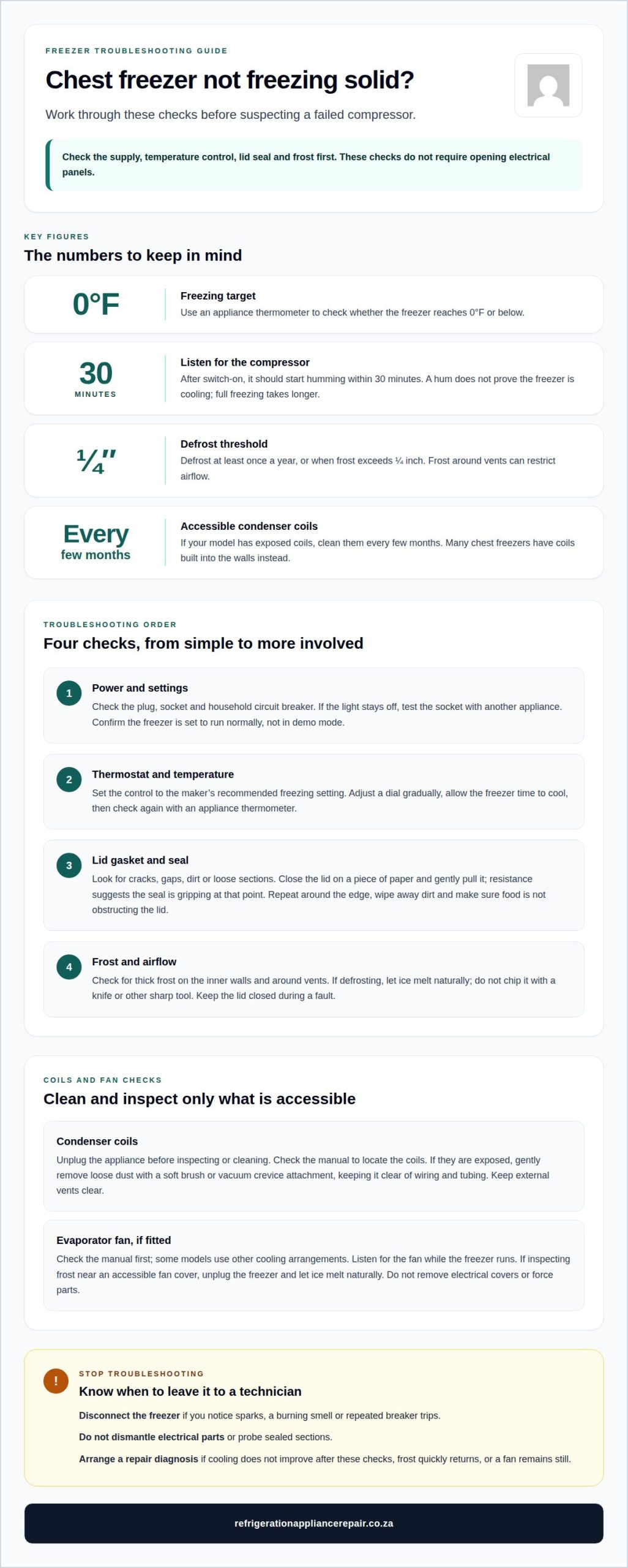
Check the supply, temperature control, lid seal and frost before suspecting a failed compressor. Food freezes solid at 0°F or below; after switch-on, listen for the compressor to start humming within 30 minutes. This chest freezer not freezing solid troubleshooting sequence starts with checks you can make without opening electrical panels.

  1. Check the power supply and circuit breakers

    Check the plug, socket and household circuit breaker first. If the freezer light stays off, test the socket with another appliance, then restore power if the breaker has tripped. Check that the freezer is set to run normally, not in demo mode. A humming compressor suggests it has started, but doesn’t prove the freezer is cooling. If you notice sparks, a burning smell or repeated breaker trips, disconnect the freezer and stop troubleshooting.

  2. Check the thermostat and temperature controls

    Set the thermostat to the maker’s recommended freezing setting, then allow the freezer time to cool before judging the result. Use an appliance thermometer to check whether it reaches 0°F or below. A newly switched-on freezer needs time to cool its cabinet and contents; the compressor should start humming within 30 minutes, but full freezing takes longer and depends on the load and starting temperature. Adjust a dial gradually and check the temperature again. A freezer running constantly may have a faulty thermostat, poor insulation or a damaged seal.

  3. Inspect the lid gasket and door seal

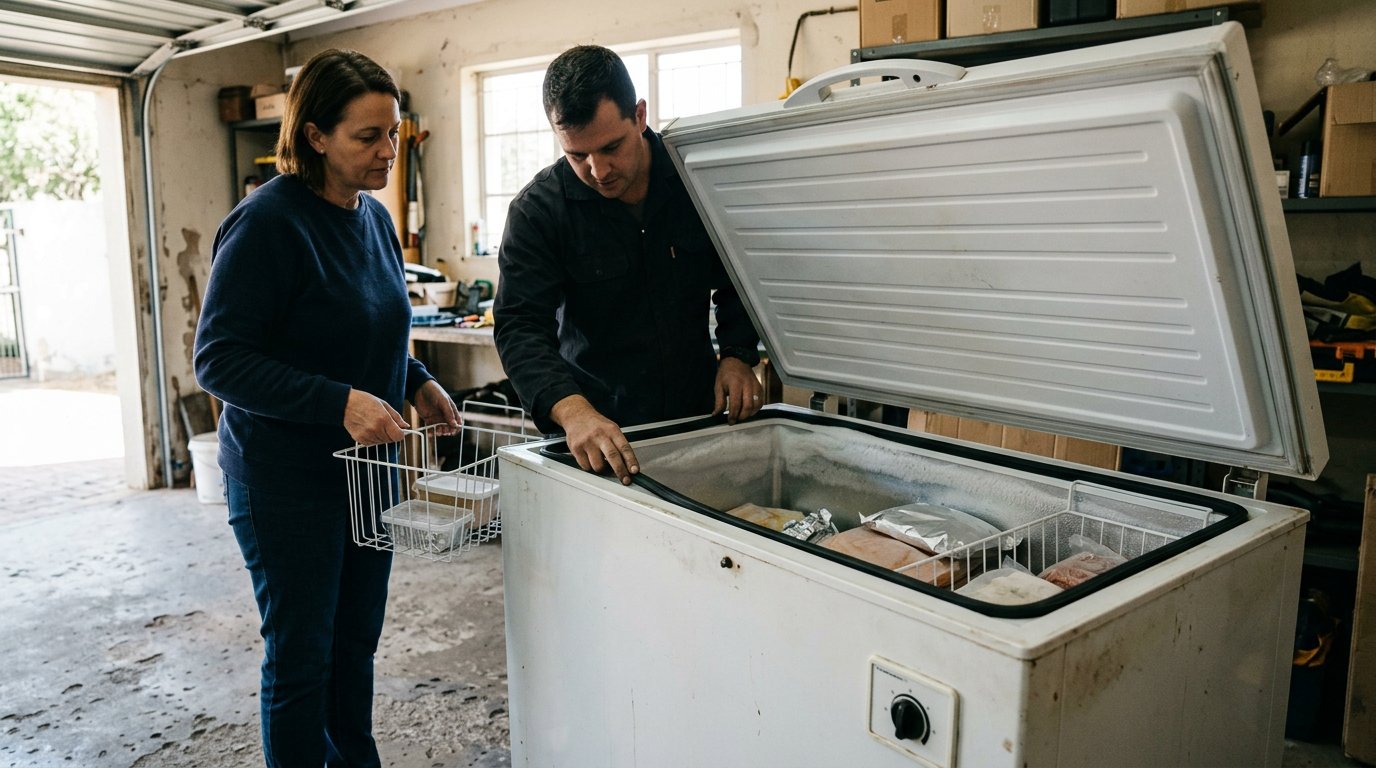
    Inspect the gasket around the lid for cracks, gaps, dirt or sections that have pulled loose. Close the lid on a piece of paper, then gently pull it. Resistance suggests the seal is gripping at that point. Repeat around the edge to spot uneven contact. A weak seal lets warm air in, increases frost buildup and makes cooling harder. Wipe away dirt and make sure stored food doesn’t obstruct the lid. Keep the lid closed during a fault. How long food stays frozen depends on the insulation, room temperature and how often the lid is opened.

  4. Reduce frost and check the defrost system

    Look for thick frost on the inner walls and around vents, where buildup can restrict airflow and interfere with cooling. Defrost the freezer at least once a year, or when frost exceeds 1/4 inch. Frequent lid openings and a poor gasket can bring frost back quickly. If frost returns despite defrosting and a sound seal, the defrost system or thermostat may be faulty. Clicking can point to a start-relay problem; unusual humming or constant running can signal a component fault. Use this chest freezer not freezing solid troubleshooting check to spot when a professional diagnosis is needed. Don’t dismantle electrical parts.

Cleaning condenser coils

  1. Unplug the appliance before inspecting or cleaning accessible condenser coils. Check the owner’s manual to locate them, because chest freezer coils are often built into the walls rather than exposed behind the cabinet. Don’t remove panels or probe sealed sections. A chest freezer’s cooling problem may have another cause.
  2. If your model has exposed coils, remove loose dust with a soft brush or vacuum crevice attachment. Work gently and keep the nozzle clear of wiring and tubing. Dust on condenser coils can reduce heat release and weaken cooling. Clean accessible coils every few months, then plug the appliance back in and monitor its temperature.
  3. Notice whether the freezer cools better after cleaning, but don’t assume dirty coils explain every fault. The condenser removes heat from the refrigerant, and restricted airflow around it can make the system work harder. Keep the appliance’s external vents clear and avoid placing it tightly against stored items or other objects that trap warm air.
  4. Listen for a fan only if your model has a condenser fan, and check for visible obstructions without reaching inside. A faulty condenser fan motor can prevent heat from dispersing; a faulty evaporator fan can interrupt cold-air circulation. These fans do different jobs, so identify which one has stopped before interpreting the symptoms. Don’t dismantle electrical parts.

If cleaning accessible coils doesn’t improve cooling, arrange a freezer cooling repair to diagnose fan or sealed-system faults.
How to Troubleshoot a Chest Freezer That Won’t Freeze Solid

Inspecting and defrosting the evaporator fan

  1. Check the freezer manual to see whether your chest freezer has an evaporator fan. Some models use other cooling arrangements, so don’t assume a fan is missing or faulty. If fitted, listen for it while the freezer runs. On models with a lid switch, hold it down briefly to make the appliance register that the lid is closed. No fan noise, scraping or vibration can indicate an obstruction or component fault.
  2. Unplug the freezer before inspecting frost around an accessible fan cover. Heavy frost can restrict airflow, stop the fan blades and make it harder for the freezer to maintain a steady temperature. Remove loose food and shelves as directed in the manual, then let the ice melt naturally. Don’t chip frost with a knife or other sharp tool, which could damage internal surfaces or cooling components.
  3. Dry the interior after defrosting, reconnect the appliance and listen for the fan as cooling resumes. If frost quickly returns or the fan remains still, note what you observe rather than removing electrical covers. The fan motor may need repair or replacement, but frost can also indicate a defrost-system fault. Repeated buildup is a reason to consult a technician.
  4. Ask a technician to inspect the defrost temperature sensor and timer if frost keeps collecting after a full manual defrost. The sensor helps signal when defrosting is needed, and a faulty sensor may give the system an incorrect reading. A failed timer can also prevent the defrost cycle from operating. These parts involve electrical checks, so don’t test wiring or attempt replacement yourself.

Chest freezer thermostat troubleshooting

  1. First identify the thermostat control and its current setting. Check the freezer manual for the control’s markings, since dial directions vary by model. If the setting has shifted, return it to the recommended position, then use an appliance thermometer to track the cabinet temperature. Changing the setting affects cooling demand, but won’t repair a failed thermostat or compressor.
  2. Adjust the thermostat gradually rather than turning it repeatedly between extremes. Keep the lid closed while the freezer runs, and note whether the thermometer reading moves towards the freezing target. The recommended food-storage temperature is 0°F or below. If the control reaches its coldest setting but food remains soft, record the reading and symptoms for diagnosis.
  3. Listen for a click as you turn the thermostat from its lowest to highest setting. If there’s no click, the control may not be operating correctly, and professional thermostat replacement is recommended. Don’t remove the control panel or test electrical connections yourself. A click alone doesn’t prove the thermostat is working, so compare it with temperature changes and compressor behaviour.
  4. Separate thermostat symptoms from other freezer problems before deciding on a repair. A faulty gasket or lid seal can let warm air in, while a compressor or fan fault can also interrupt cooling. If the thermostat setting changes but the cabinet temperature doesn’t respond, tell the technician what you observed. Freezers can last between 10 and 15 years, but age alone doesn’t identify the failed part.

If the control fails to respond or the freezer won’t maintain temperature, arrange chest freezer repairs.

Access Refrigeration & Appliance Repairs: Freezer repairs

Access Refrigeration & Appliance Repairs provides on-site freezer repairs when thermostat, fan, defrost or cooling faults persist after basic checks. A technician can assess the appliance, identify the cause and carry out the repair needed to restore reliable freezing.

Arrange a repair if the thermostat doesn’t respond, frost quickly returns, the fan stays still or the freezer runs without reaching its proper temperature. Stop using the appliance if you notice sparks, a burning smell or repeated breaker trips, and mention these symptoms when arranging service.

Contact Access Refrigeration & Appliance Repairs to discuss an on-site freezer repair.

Choose the right next step for your freezer

If chest freezer not freezing solid troubleshooting hasn’t identified the cause, avoid repeated adjustments that leave the appliance struggling. Note what happens while it runs, including temperature changes, unusual sounds or returning frost. These details give the repair technician a clearer starting point.

Base your next step on what the freezer is doing now. If it still won’t keep food frozen after the basic checks, an on-site diagnosis can distinguish a control issue from a fault inside the cooling system. That helps identify the part needing attention instead of replacing components without a clear reason.

For practical help with a freezer that won’t freeze properly, contact Access Refrigeration & Appliance Repairs about freezer repairs. Take the next step with a clear account of the symptoms, and get your freezer problem moving towards a proper resolution.

Frequently Asked Questions

Can I fix a freezer on my own?

Yes, you can handle simple external checks, but leave electrical and sealed cooling-system repairs to a technician. Limit your checks to accessible areas and follow the appliance manual. Don’t remove panels, touch wiring or attempt refrigerant repairs. If a breaker trips repeatedly, or you notice sparks or a burning smell, stop using the freezer and arrange professional help.

How can I keep my freezer cold and working properly?

Keep the freezer in a cool, ventilated spot away from heat sources, with space around its exterior for airflow. Organise packages so you can retrieve food quickly without leaving the lid open. Avoid packing food against vents or the fan cover. Use a freezer thermometer to monitor conditions, and note any changes that continue after routine cleaning.

What could cause my refrigerator and freezer to stop cooling?

If both compartments in a fridge-freezer stop cooling at the same time, consider a shared fault such as a power interruption, compressor problem or cooling-system issue. A failed start relay can cause clicking, while a faulty thermostat may affect temperature control. Check whether the lights or displays still work and note any unusual sounds. These symptoms can help distinguish a shared fault from a compartment-specific problem.

When should I contact a professional?

Contact a technician if basic checks don’t restore cooling, the thermostat doesn’t respond, frost rapidly returns or the compressor makes unusual noises. Stop troubleshooting immediately if there are sparks, a burning smell or repeated breaker trips. Access Refrigeration & Appliance Repairs provides on-site freezer repairs across Gauteng, including Johannesburg and Pretoria, for faults that need hands-on diagnosis.

How do I test chest freezer door seals and check for air leaks?

Inspect the entire gasket, especially the corners, for cracks, dirt or sections that don’t sit flat. Close the lid over a strip of paper, then pull it gently. Repeat at several points around the rim. A noticeably weaker grip in one area can indicate uneven sealing. Clean away residue and check that a package isn’t stopping the lid from closing fully.

How do I defrost a chest freezer and clear blocked vents or drains?

Unplug the freezer, move food to suitable cold storage and let the ice melt naturally. Place towels around the base to catch water, then clear visible debris from accessible vents or the drain opening. Never use a knife or force tools against ice, and don’t remove electrical covers. Dry the interior before restarting, and arrange an on-site repair if frost or pooling returns.
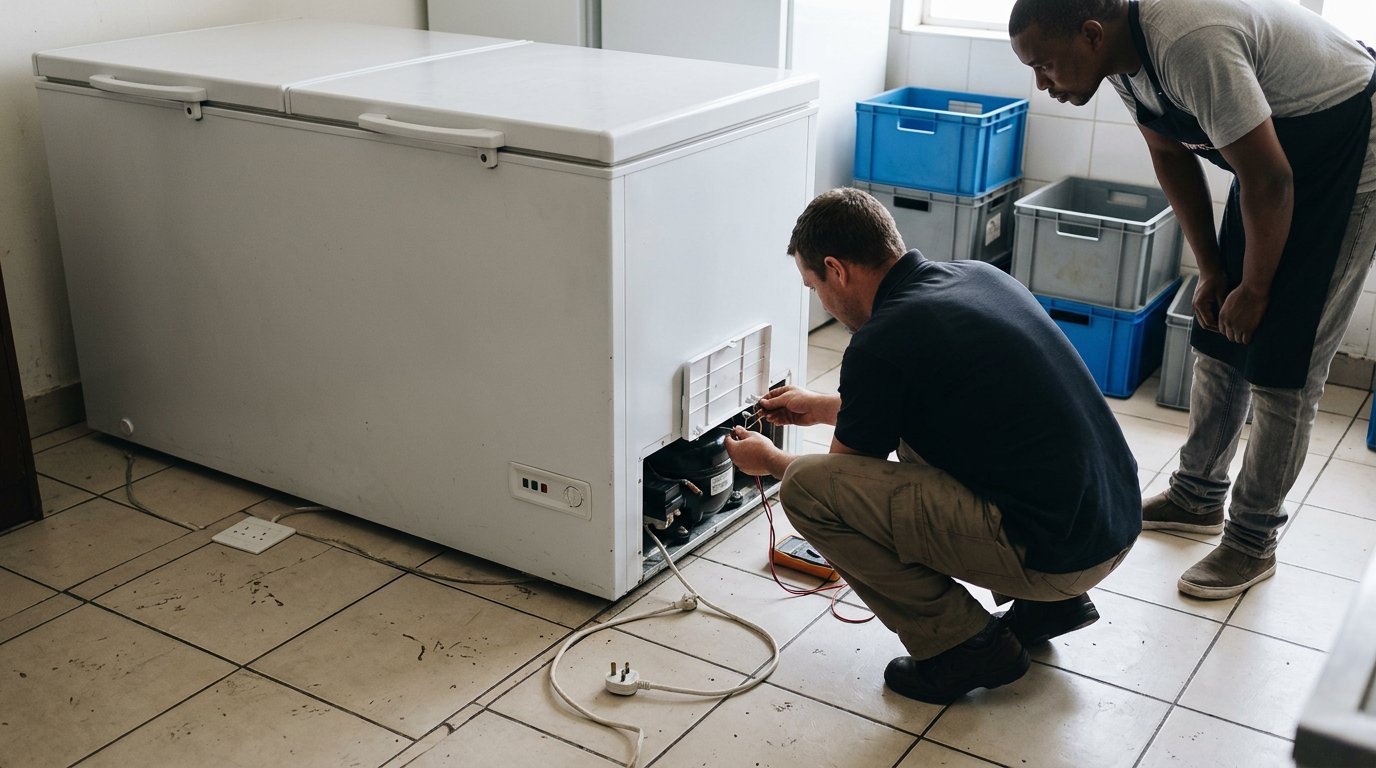
A technician checks a chest freezer’s compressor in a Sandton butcher’s stockroom.
Emergency Chest Freezer Repair in Sandton: Fast, Practical Help

What if the best way to protect your freezer contents is to keep the lid closed? When a chest freezer starts warming, food or business stock may be at risk. Guessing at the fault or attempting electrical repairs can make matters worse. Keep the lid shut, check the power supply only if it’s safe, and note any clicking, silence or water around the unit. For emergency chest freezer repair Sandton customers can arrange an on-site assessment at their location.

An urgent refrigeration breakdown calls for clear, practical steps. This guide explains what to do first, what an on-site diagnosis may involve and how to arrange help in Sandton. Same-day service when possible, depending on technician availability and your location.

Repairs are quoted before on-site work begins, with no hidden fees. Free Call-Out If Quotation Is Accepted. Certified Technicians for All Major Brands. 6 Months Guaranteed on Spares Supplied & Workmanship. Quality that is Guaranted.

Key Takeaways

  • Request an on-site assessment if your chest freezer keeps losing cooling or causes repeated electrical trips. Avoid guessing at the fault.
  • During emergency chest freezer repair Sandton service, an on-site technician assesses the reported symptoms and checks for possible refrigeration faults.
  • When arranging a visit, describe what the freezer is doing, give your Sandton location and say whether household food or business stock is affected.
  • A diagnosis helps you understand the proposed on-site repair and quotation before work begins.

Emergency chest freezer repair in Sandton: recognise when to act

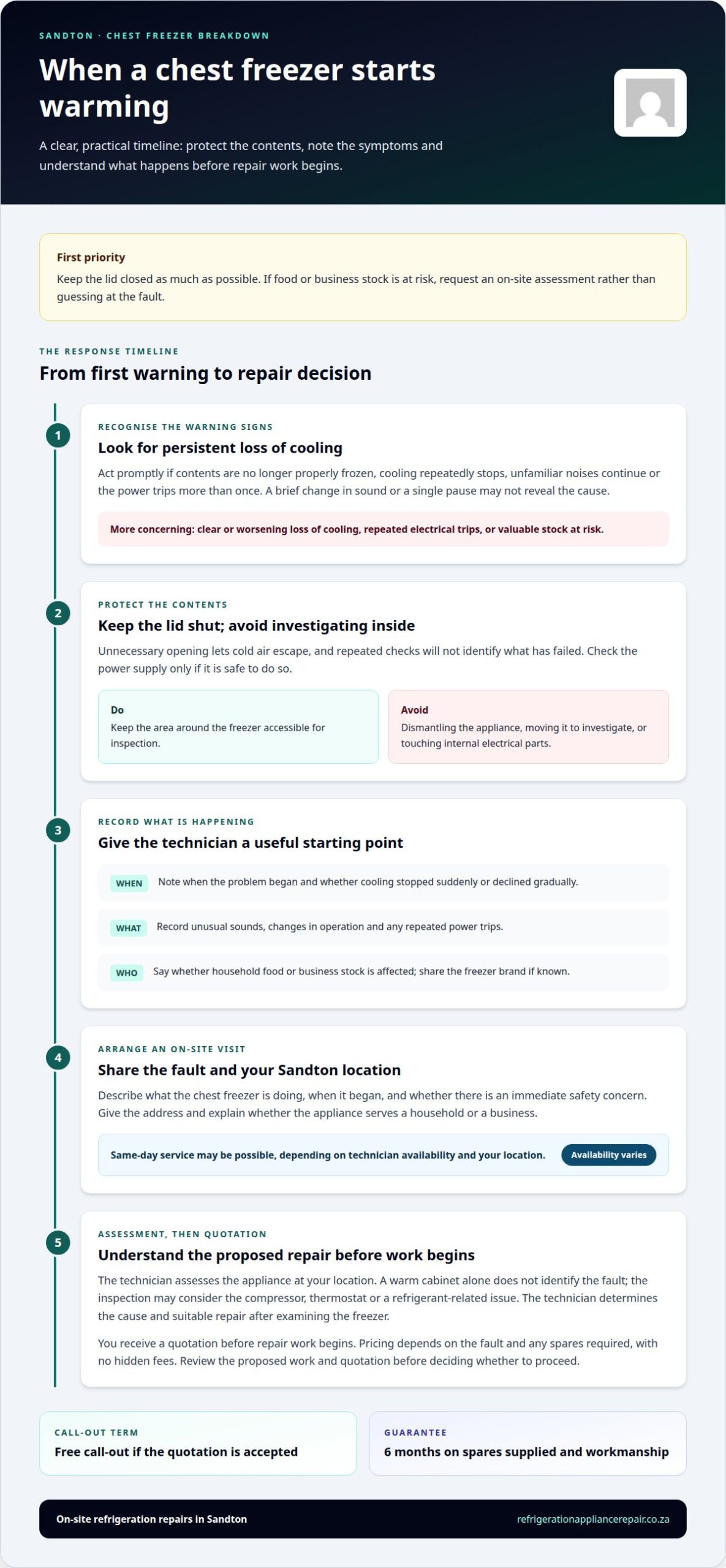
A chest freezer that’s warming puts household food or business stock at risk, especially if the temperature keeps rising. If the contents no longer feel properly frozen, cooling has stopped, the appliance is behaving unusually or its power keeps tripping, request an on-site assessment rather than waiting for the fault to worsen. Refrigeration & Appliance Repairs provides on-site refrigeration repairs in Sandton, so the freezer can be assessed at your location.

A brief change in sound or a single pause in operation may not tell you enough to judge the problem. A clear loss of cooling or repeated electrical trips are more concerning, particularly when valuable stock is inside. Symptoms alone can’t identify the cause. The vapor-compression refrigeration cycle involves connected parts, so a fault in one area can affect cooling elsewhere. Leave diagnosis to a technician carrying out an on-site assessment.

Which chest freezer symptoms call for urgent help?

Act promptly if the freezer is no longer keeping its contents frozen, repeatedly stops cooling, makes unfamiliar noises or causes the power to trip more than once. A minor, brief change may be less urgent than a persistent or worsening problem, but don’t assume the unit is recovering if it continues to warm. With food or business stock at stake, explain what you’ve noticed and request an on-site assessment. Don’t dismantle the appliance or touch internal electrical components. This can create further risk and complicate the on-site repair.

What should you do before help arrives?

Keep the lid closed as much as possible. Each unnecessary opening lets cold air escape, while repeated checks won’t reveal what has failed. Make the area around the freezer accessible so the technician can inspect it on-site. Avoid moving or opening the appliance to investigate internal parts.

  • Note when the problem began and whether cooling has stopped completely or declined gradually.
  • Record unusual operation, warning signs and any repeated power trips.
  • Tell the technician whether household food or business stock is affected.

These details help explain the urgency and give the technician a clearer starting point for the on-site assessment.

What happens during on-site chest freezer diagnosis in Sandton?

A technician assesses the chest freezer at your location, using the symptoms you report to guide the on-site inspection. A warm cabinet alone doesn’t reveal the cause. The assessment may consider the compressor, thermostat or a refrigerant-related fault. These are possibilities, not a diagnosis: the technician determines what’s wrong and which on-site repair is suitable after examining the appliance.

The assessment also helps distinguish a cooling fault from a problem affecting how the unit starts or runs. Share what you’ve noticed, but don’t try to open the freezer or test internal components yourself. For urgent emergency chest freezer repair Sandton, an on-site assessment gives the technician a chance to inspect the appliance where it’s installed.

What information helps the technician assess the fault?

Describe the symptoms and when they began. Mention whether cooling stopped suddenly or declined over time, and note any unusual sounds, changes in operation or power interruptions. If possible, provide the freezer’s brand and explain any relevant changes you noticed before the fault. These details help focus the on-site assessment without relying on guesswork.

If you’re also dealing with a fridge fault, the Samsung fridge repair in Johannesburg article offers related refrigeration guidance. For food safety context, the FDA food safety guidelines for freezer storage explain how long a closed freezer may keep food frozen during a power outage.

How does the quotation and repair decision work?

After assessing the freezer on-site, you receive a quotation before any repair work begins. Pricing varies according to the fault and any spares needed, and there are no hidden fees. You can review the proposed on-site work and quotation before deciding whether to proceed. Free Call-Out If Quotation Is Accepted. The repair and any required spares are determined after the assessment.

For a clear next step, arrange an on-site chest freezer repair in Sandton and describe the symptoms when booking.

Emergency Chest Freezer Repair in Sandton: Fast, Practical Help

How to arrange emergency chest freezer repair in Sandton

Keep the booking straightforward: describe the chest freezer fault, give the Sandton address and request an on-site visit. Refrigeration & Appliance Repairs provides on-site refrigeration repairs across Gauteng, including Sandton. Tell the team whether household food or business stock is affected so the urgency is clear.

What details should you provide when requesting service?

Share the appliance type and brand, what it’s doing and when the problem began. For example, mention if cooling has stopped, the unit is making unusual noises or power keeps tripping. Include any immediate safety concern and say whether the freezer serves a household or a business. These details give the technician a useful starting point for arranging emergency chest freezer repair Sandton on-site.

For food concerns, consult FoodSafety.gov frozen food safety recommendations to help assess stored items during a power outage. Same-day service when possible, depending on technician availability and your location.

What service terms should you expect?

You’ll receive a quotation before on-site work begins. Pricing varies according to the fault and any spares required, with no hidden fees. The call-out term is Free Call-Out If Quotation Is Accepted. The workmanship warranty is 6 Months Guaranteed on Spares Supplied & Workmanship. Review the quotation before approving the on-site repair.

To request an on-site assessment, contact the team on +2772 349 4747 or +2772 515 1248, or use the online repair enquiry form. Include your Sandton location and the freezer details to help get the booking under way. On-site service is available across Gauteng, including RANDBURG, JOHANNESBURG-SOUTH, PRETORIA, PRETORIA-EAST, PRETORIA-NORTH, GERMISTON, SPRINGS, SANDTON, ROODEPOORT, MIDRAND, EDENVALE, BEDFORDVIEW, VANDERBIJLPARK, VEREENIGING, MEYERTON, FOURWAYS, ROSEBANK, BENONI, ALBERTON, BOKSBURG, CENTURION.

Choose on-site chest freezer repair in Sandton with clear service terms

For a chest freezer breakdown in Sandton, Access Refrigeration & Appliance Repairs provides on-site refrigeration repairs at your location. The service covers domestic, commercial and industrial refrigeration units, helping households and businesses arrange an assessment without transporting the appliance. The company provides emergency repair services for urgent appliance breakdowns, especially when refrigeration equipment is involved, with repairs carried out on-site.

What reassurance does the service provide?

Technicians assess the freezer and its reported fault on-site before recommending a repair. The business has more than eighteen years in the business and over 25 years worth of experience. Certified Technicians for All Major Brands. The proposed on-site work and its terms are explained before you decide, without promising a repair outcome before the appliance has been assessed.

Pricing varies according to the fault and any spares required. You receive a quotation before on-site work begins, with no hidden fees, so you can review the proposed repair before approving it. The call-out term is Free Call-Out If Quotation Is Accepted. Spares supplied and workmanship carry the stated guarantee: 6 Months Guaranteed on Spares Supplied & Workmanship. Quality that is Guaranted.

How can Sandton customers take the next step?

Have your Sandton location and a short description of the chest freezer breakdown ready when you call. Explain whether the unit serves a household or business, what symptoms you’ve noticed and whether food or stock is affected. This gives the team practical details to arrange an on-site assessment and understand the urgency.

For emergency chest freezer repair Sandton, call +2772 349 4747 or +2772 515 1248 to describe the fault and request an on-site assessment. The quotation is provided before any repair work begins.

Take the next step towards a working freezer

A freezer fault can interrupt household routines or business operations, but the next step doesn’t need to be complicated. Arrange an on-site assessment, explain what the chest freezer is doing and give the technician a clear picture of its location and use. That helps move from uncertainty towards a practical repair decision, with the appliance assessed where it’s installed.

If you need emergency chest freezer repair Sandton, have your contact details and a short description of the breakdown ready. You can also explain what matters most to get back on track, whether that’s protecting household supplies or reducing disruption to business stock. A technician can assess the appliance on-site and explain the proposed work before you decide how to proceed.

For a direct next step, call +2772 349 4747 or +2772 515 1248 to arrange on-site freezer repair. A clear description of the fault is a good start. Request an assessment and move towards restoring dependable freezer operation.

Frequently Asked Questions

What should I do if my chest freezer stops cooling?

Keep the lid closed as much as you can and don’t dismantle the freezer or handle electrical parts. Note when cooling changed and whether the unit is silent, making an unusual sound or causing a power trip. If household food or business stock is at risk, request urgent appliance repair, especially for refrigeration equipment. Repairs are performed on-site at your location.

Can I get same-day chest freezer repair in Sandton?

Sandton is within the company’s Gauteng service area, but same-day service isn’t guaranteed for every request. When arranging emergency chest freezer repair Sandton, give the exact location, explain what the freezer is doing and say whether household food or business stock is affected. This helps the team understand the urgency of the breakdown and arrange on-site service.

How much does emergency chest freezer repair in Sandton cost?

The cost depends on the freezer fault and any parts required, so a repair price can’t be assumed before assessment. You’ll receive a quotation before on-site work begins, and there are no hidden fees. The call-out is free only if you accept the quotation: Free Call-Out If Quotation Is Accepted. Review the proposed on-site repair and quoted cost before deciding whether to proceed.

Does chest freezer repair include a workmanship warranty?

Eligible supplied spares and workmanship are covered by 6 Months Guaranteed on Spares Supplied & Workmanship. This is the workmanship warranty. The technician assesses the freezer on-site, then provides a quotation before work begins. Check that the quoted on-site repair and any spares to be supplied are clear before approving the work.

Can you repair a chest freezer at my home or business in Sandton?

Yes. Access Refrigeration & Appliance Repairs carries out on-site repairs for domestic, commercial and industrial refrigeration units in Gauteng, including Sandton. When you request service, provide the address, freezer brand and symptoms. Mention whether the unit is used at home or for business, and whether its contents are affected.