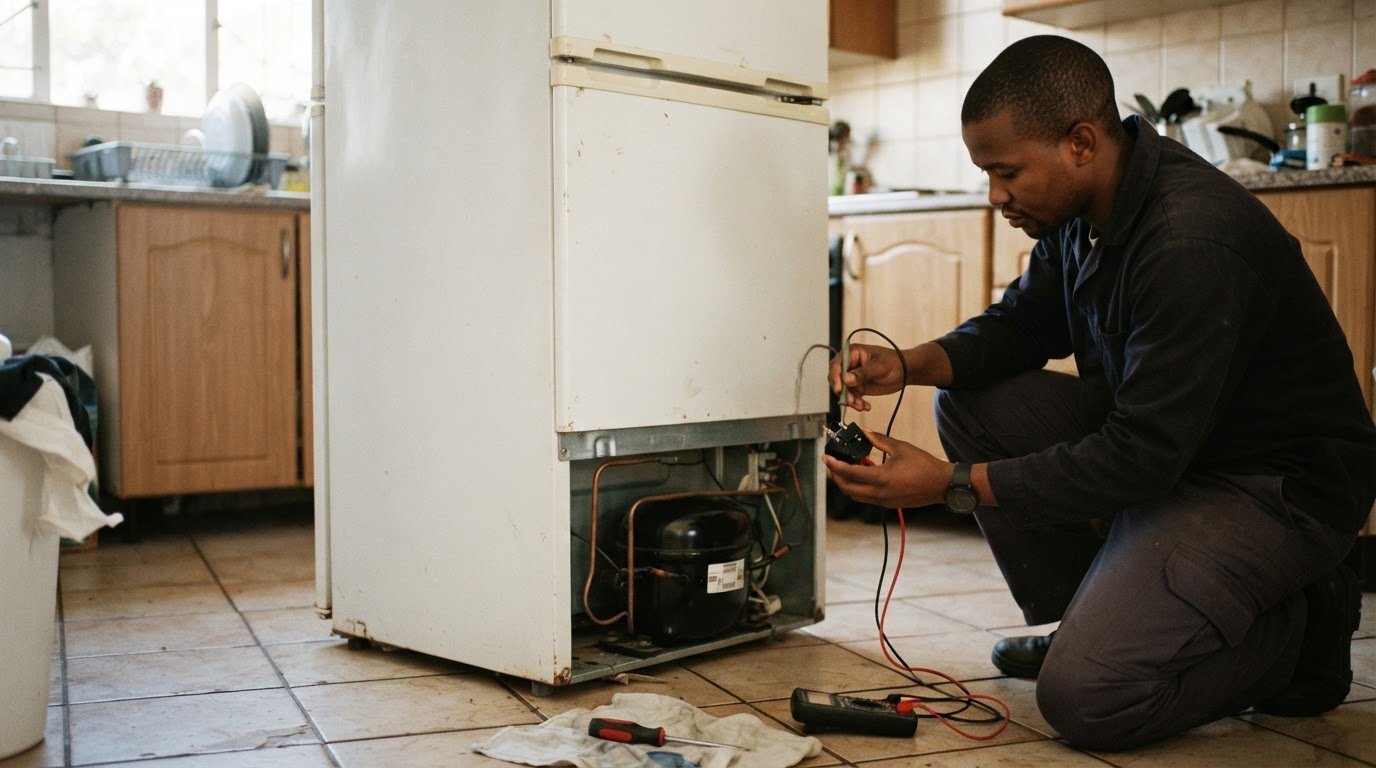
Samsung Fridge repair in Johannesburg for cooling and electrical faults
A fridge that runs but won’t stay cold may have a cooling, temperature-control or airflow fault; electrical problems can also stop it working properly. Fridge repair in Johannesburg can address these issues in household and commercial fridges and freezers, depending on the fault and the appliance’s condition. The first step is identifying what has changed, from warm food and uneven temperatures to unusual noises or a unit that won’t power on.
It’s stressful when a fridge or freezer can’t keep food at a safe temperature, especially when you rely on it every day. Similar symptoms can have different causes: restricted airflow, a faulty thermostat or a power issue may all affect cooling.
This article covers common cooling and electrical faults, what a repair assessment involves, and what can affect the work required. You’ll also learn what to note before arranging a repair, so you can describe the problem clearly and know what to expect next.
Key Takeaways
- Note whether the fridge is warm, making unusual noises or failing to switch on; these symptoms help distinguish cooling faults from electrical problems.
- Domestic fridges and commercial refrigeration equipment serve different needs, so the appliance type and how it’s used matter when assessing a fault.
- Check for blocked airflow, poor door sealing and uneven temperatures, as these can help explain why cooling is inconsistent.
- Share what the appliance is doing and when the problem started to help guide the repair assessment.
Common fridge and freezer faults
A fridge can run continuously yet leave milk warm or vegetables limp. A damaged door seal, blocked vents or crowded shelves can disrupt cold-air circulation. Frost building up inside a freezer may point to a defrost or airflow problem. Water beneath the drawers can result from a blocked drain, while clicking without starting can indicate an electrical or starting fault. These symptoms help guide diagnosis, but they don’t identify the failed part on their own.
Do Johannesburg fridge repair services offer same-day or emergency repairs? Same-day repair services are advertised in Johannesburg, but emergency response depends on the service and its schedule. When booking, explain whether the fridge has stopped cooling completely or the freezer is also affected. A unit that has lost power needs a different assessment from one that runs but stays warm.
Which fridge brands do Johannesburg repair technicians service? Brand coverage varies with the technician’s experience, appliance model and parts required. Give the make and model from the label inside the fridge or near its door. That information helps identify the appliance before a visit.
Do fridge repair companies in Johannesburg offer warranties on parts and labour? Check what the guarantee covers and how long it lasts. Access Refrigeration & Appliance Repairs provides a six-month guarantee on supplied spares and workmanship. Keep the repair documentation with the appliance details.
How can I find a reputable, qualified fridge repair technician in Johannesburg? Look for a clear diagnostic process, an itemised quotation and written terms for parts and workmanship. The technician should explain the fault found, the proposed repair and any parts involved. Before agreeing to the work, make sure you understand its scope.
What should I check before booking a fridge repair in Johannesburg? Note the make and model, when the fault started, and whether the lights, motor or display still work. Safely check the plug and household socket, and report any burning smell or repeated tripping. Don’t dismantle electrical components.
Do technicians service Sandton, Randburg and Soweto? Coverage depends on the service area; give the suburb and nearest landmark when arranging a visit. This helps establish whether the address falls within the Johannesburg operating area.
Domestic and commercial refrigeration
A household fridge usually stores food for one family, while commercial equipment supports daily trading. A restaurant may rely on a preparation fridge, display cabinet and freezer at once. A small shop might use a drinks cooler beside its food-storage fridge. Each unit has a different role, so describe what it stores and how often staff open it.
Commercial equipment can face heavier use than a domestic appliance. Frequent door openings, regular restocking and warm kitchens can affect how consistently a unit cools. A display fridge in a busy shop also has different demands from a household fridge that stays closed for longer periods. These usage details help distinguish an equipment fault from operating conditions.
- Domestic fridges: note whether the issue affects the fridge compartment, freezer compartment or both.
- Chest and upright freezers: describe the stored goods and whether frost or temperature changes are visible.
- Display cabinets: report which section or shelf appears affected, and whether the problem continues during quieter periods.
- Cold rooms: explain how the space is used and whether the fault affects the whole room or one area.
Before arranging an assessment, make a simple equipment list. Include each appliance’s make, model and location, such as “upright freezer in the storeroom”. At a commercial site, note when the problem appears: during restocking, after repeated door use, or throughout the day. These observations help the technician understand the operating environment and assess the right unit.
Keep access clear around the appliance and its controls. For a cold room, clear the entrance and identify any separate cooling equipment nearby. In a shop or kitchen, tell staff which unit needs attention so they can explain its normal use. Avoid moving stored goods into another unit if that would block its airflow.
For equipment serving a business, record the affected unit and its role before arranging refrigeration repair. Clear details help focus the assessment on the appliance, its workload and the areas affected.
Fridge cooling and temperature problems
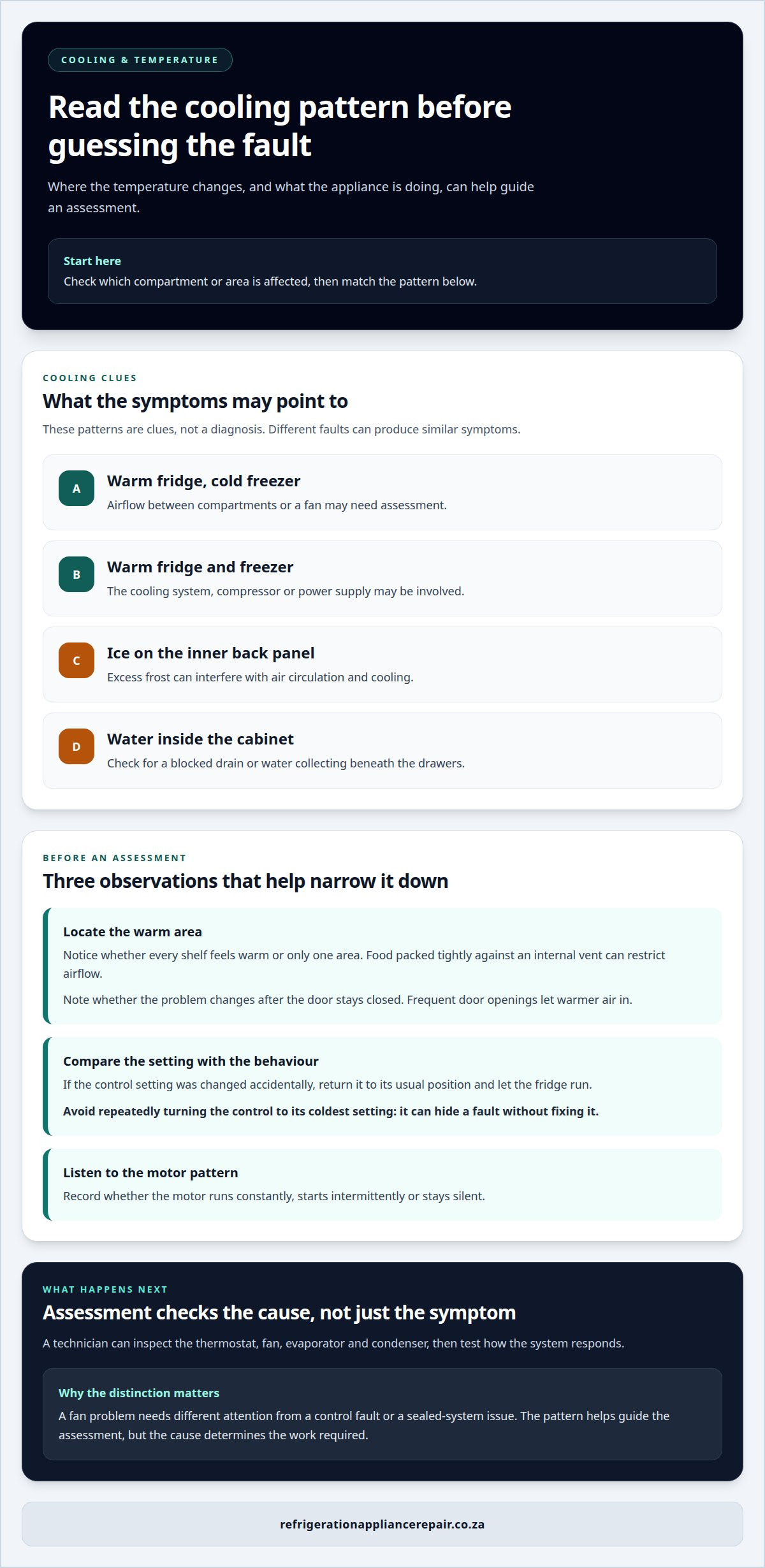
A fridge that cools unevenly needs a closer look than its display setting. Check whether every shelf feels warm or only one area does. Food packed tightly against an internal vent can restrict airflow, while frequent door openings let warmer air in. Note which compartment is affected and whether the problem changes after the door stays closed.
Next, compare the control setting with the fridge’s actual behaviour. If the setting was changed accidentally, return it to its usual position and let the fridge run. Don’t keep turning the control to its coldest setting: that can hide a fault without fixing it. Record whether the motor runs constantly, starts intermittently or stays silent.
- Warm fridge, cold freezer: airflow between compartments or a fan may need assessment.
- Warm fridge and freezer: the cooling system, compressor or power supply may be involved.
- Ice on the inner back panel: excess frost can interfere with air circulation and cooling.
- Water inside the cabinet: inspect for a blocked drain or water collecting beneath drawers.
These patterns are clues, not a diagnosis. A technician can inspect the thermostat, fan, evaporator and condenser, then test how the system responds. The cause matters: a fan problem needs different attention from a control fault or sealed-system issue. Share the symptoms and any changes you noticed after adjusting the controls.
Before arranging fridge repair in Johannesburg, clear items away from the internal vents and check that containers aren’t stopping the door from closing. Look for a visible gap around the seal, but don’t remove panels or handle wiring. Keep the make and model handy, and note when cooling changed. These details help focus the assessment instead of relying on a single warm shelf.
Fridge electrical issues
Does the fridge have no lights, no display and no motor sound? Start by checking the plug and wall socket. See whether another appliance works from that socket, then inspect the fridge’s power lead for visible damage. Don’t touch exposed wires or remove electrical covers. If the socket works but the fridge stays off, the fault may involve its internal wiring, control board or power components.
A fridge that repeatedly switches off may have a different fault. A damaged thermostat may interrupt operation, while a failing start relay can prevent the compressor from starting. Listen for repeated clicking, note whether the interior light stays on, and record when the appliance stops. These details help distinguish a control fault from an interruption in the household power supply.
- No interior light: check the socket and plug, then report whether the display also remains blank.
- Repeated clicking: note how often it happens and whether the compressor starts afterwards.
- Power trips when switched on: stop resetting the circuit and arrange an assessment.
- Burning smell or visible sparks: keep away from the appliance and seek professional attention.
Electrical diagnosis can involve the supply connection, wiring, thermostat, start relay, control board and compressor circuit. A technician tests relevant components to locate the interruption rather than replacing parts by guesswork. Explain what happened just before the fault, such as a power cut, a socket change or a sudden shutdown.
Before arranging a visit, note the make and model, the symptoms, and whether the socket powers another appliance. Keep the fridge accessible, but leave internal panels and wiring untouched. If the circuit trips or you notice a burning smell, don’t continue switching the fridge on. For an electrical fault affecting your fridge, arrange a fridge repair assessment and share those observations.
Access Refrigeration & Appliance Repairs: Fridge Repairs
Access Refrigeration & Appliance Repairs carries out on-site fridge repairs for cooling and electrical faults. Arrange a repair if your fridge runs without cooling, switches off unexpectedly or won’t power on. Share the make and model, the symptoms and when they began to help the technician assess the problem.
The repair process starts with identifying the fault and explaining the proposed work. If you accept the quotation, the call-out is free. Repairs are backed by a six-month guarantee on supplied spares and workmanship. The service also covers freezer repairs if a separate freezer develops a fault.
For a fridge that isn’t cooling or has an electrical fault, contact Access Refrigeration & Appliance Repairs or visit refrigerationappliancerepair.co.za.
Take the next step towards a working fridge
A clear account of what the appliance is doing gives the repair assessment a useful starting point. Before arranging help, note when the fault began, whether it changes and which compartments are affected. Include the make and model, along with any clicking, shutdowns or unusual smells. For fridge repair in Johannesburg, these observations help explain the problem without relying on guesswork.
Access Refrigeration & Appliance Repairs handles fridge, freezer and dishwasher repairs. Choose the service for the appliance causing trouble, and describe the symptoms when you get in touch. If the fault involves a fridge’s cooling or electrical system, include what you’ve observed and avoid opening electrical panels.
Ready to discuss the repair? Contact Access Refrigeration & Appliance Repairs and share the appliance details. A practical first step can make it easier to get the right fault assessed and move towards a working fridge again.
Frequently Asked Questions
Which fridge repair companies serve Johannesburg and nearby suburbs?
Access Refrigeration & Appliance Repairs provides on-site appliance and refrigeration repairs in Johannesburg and nearby areas. Its coverage includes Sandton, Randburg, Alberton, Edenvale, Benoni, Boksburg, Centurion, Roodepoort, Germiston, Kempton Park, Springs and Midrand, as well as Pretoria, Pretoria-east, Pretoria-North, Waterkloof, Vanderbijlpark, Vereeniging and Meyerton. Give your suburb and appliance type when arranging a visit.
What are common signs a fridge needs professional repair rather than troubleshooting?
Arrange a professional repair if a basic adjustment doesn’t fix the problem, or the fault returns after the fridge briefly works normally. Repeated circuit trips, a damaged power lead or a burning smell also need professional attention. Internal wiring and cooling-system work require specialist assessment. Don’t remove panels or attempt refrigerant work; note the symptoms and any simple checks you’ve tried.