Search for:
Four Cold Room Faults to Check When Cooling Fails

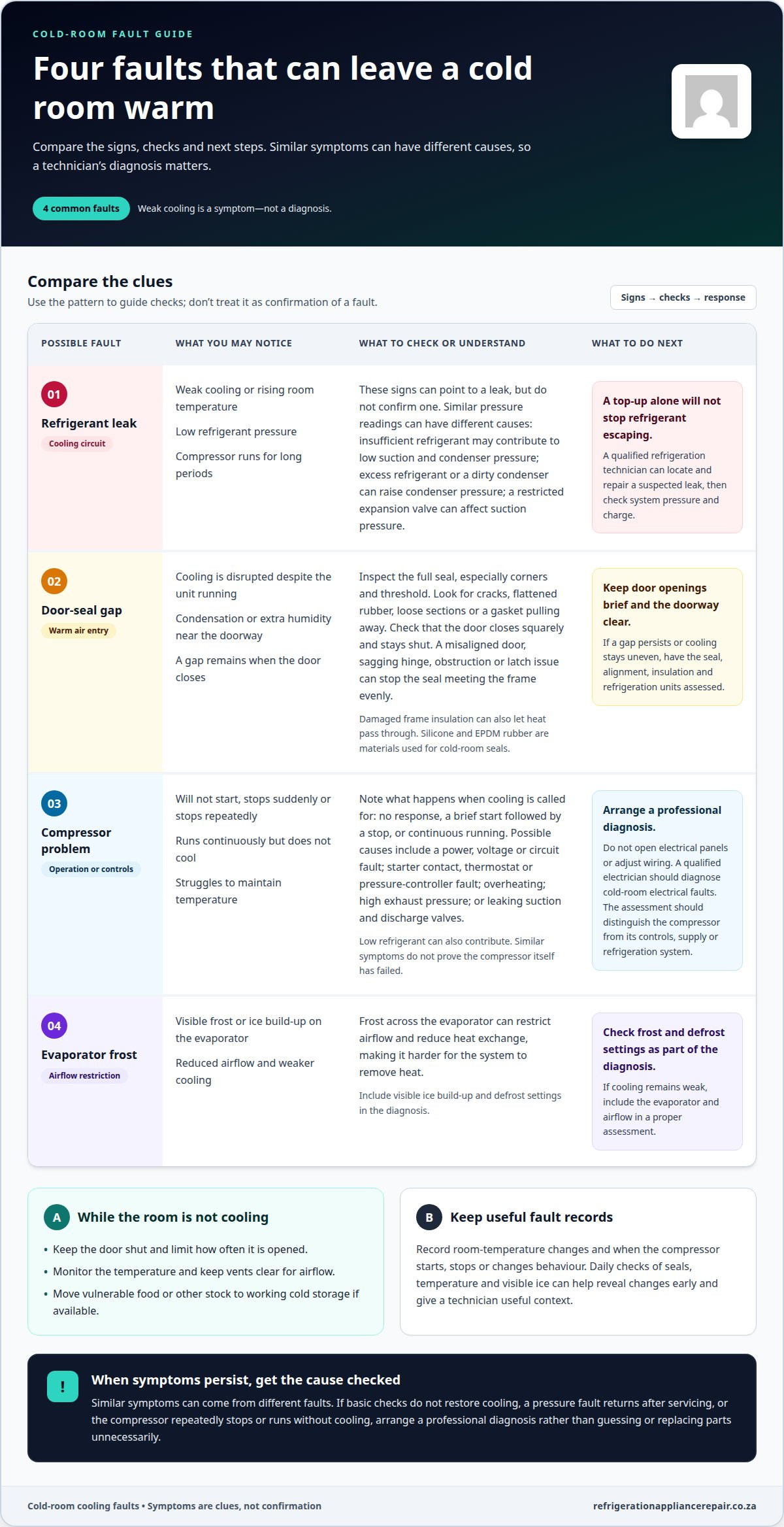
A refrigerant top-up alone won’t fix a leak. Weak cooling, low refrigerant pressure and a compressor running for long periods can point to escaping refrigerant, which must be located and repaired. That’s the starting point for cold room not cooling repair.

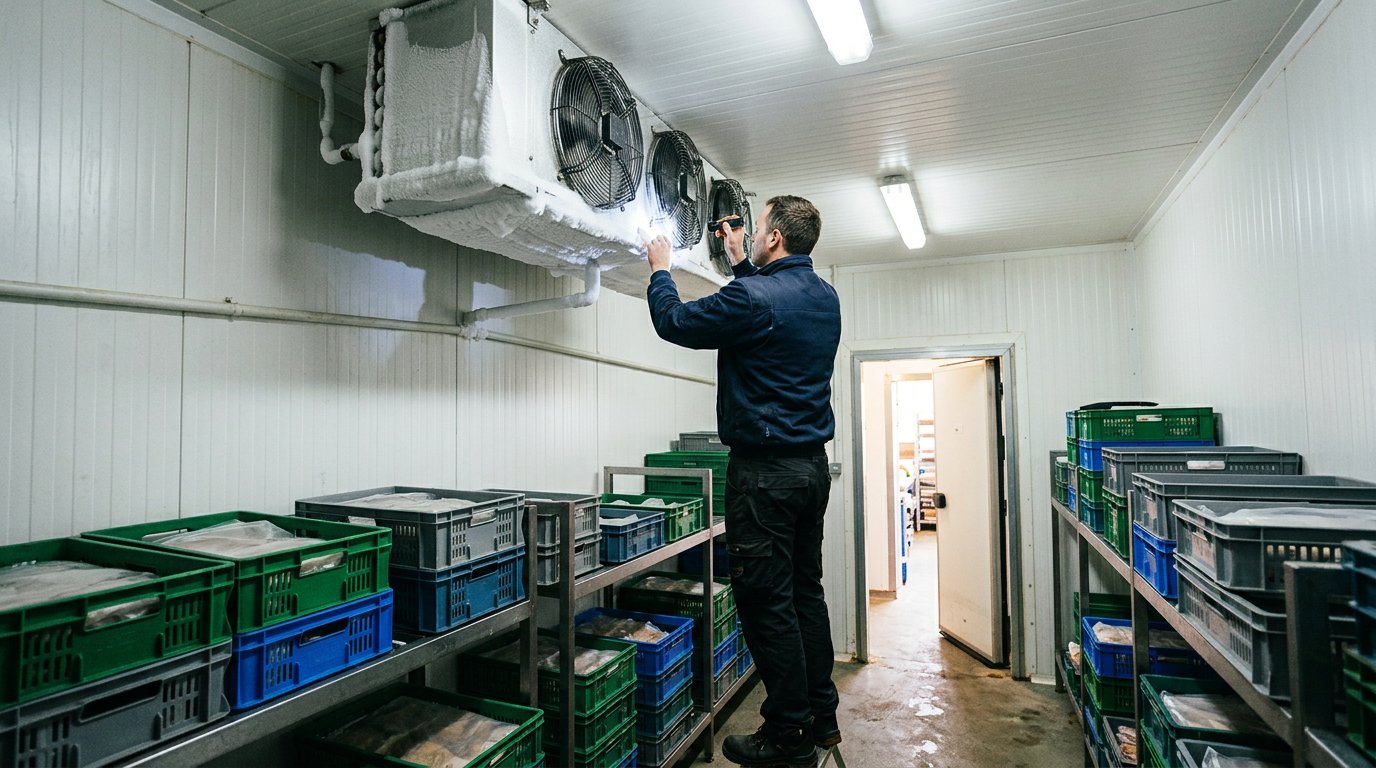
When a cold room stops holding temperature, the refrigeration unit may seem the obvious suspect. But the cause could also be a door-seal gap, a compressor fault or frost restricting airflow. Recognising the signs helps you understand what may be wrong and when a technician’s diagnosis is needed.

This guide explains four common faults and how each can affect cooling: refrigerant leaks, warm air entering through damaged seals, compressor problems and evaporator frost. Use the symptoms to understand what may be happening and what to do next.

Key Takeaways

  • Weak cooling and a compressor running for long periods can point to a refrigerant leak. A top-up alone won’t stop refrigerant escaping.
  • A door that doesn’t seal tightly can let warm air in. Look for gaps that may be undermining cooling.
  • A compressor that won’t start, stops suddenly or runs continuously can signal a fault that needs a proper diagnosis.
  • Frost on the evaporator can restrict airflow and reduce cooling. Defrost settings and ice build-up are worth checking as part of the diagnosis.

1. How do I know if my cold room has a refrigerant leak?

Weak cooling, low refrigerant pressure and a compressor running for long periods can indicate a refrigerant leak. The temperature may rise even while the unit keeps running, putting stored stock at risk. These signs suggest a problem, but don’t confirm a leak on their own.

Pressure readings can help narrow down the cause. Insufficient refrigerant can contribute to low suction and condenser pressure, while excess refrigerant or a dirty condenser can raise condenser pressure. A blocked or restricted expansion valve can also affect suction pressure. Since several faults can produce similar readings, a technician needs to assess the system rather than simply add refrigerant.

A top-up alone won’t stop refrigerant escaping through a leak. A qualified refrigeration technician uses specialised equipment to locate suspected leaks, repair them and check the system’s pressure and charge. Arrange an on-site assessment if cooling remains weak, the compressor runs for long periods or a pressure fault returns after servicing. If basic checks don’t restore cooling, seek a professional diagnosis promptly.

To find a qualified cold room repair technician near you in South Africa, look for someone who works on commercial refrigeration and can test for leaks with specialised equipment. Share the symptoms, such as weak cooling or a compressor that keeps running, so the fault can be assessed.

While the room is not cooling, keep its door shut and limit how often it’s opened. Monitor the temperature, keep vents clear for airflow, and move vulnerable food or other stock to working cold storage if available.

Include refrigeration units, refrigerant leaks, temperature controls and electrical systems in routine checks. Keeping records can show whether the temperature stays consistent or begins drifting, giving a technician useful information about when the fault started.

2. Cold room door seals and warm air leaks

A damaged, worn or loose cold-room door seal lets warm air enter. That extra heat makes the refrigeration unit work harder and can disrupt the temperature around stored stock. Moist air may also increase humidity and encourage condensation near the doorway. A gap can therefore contribute to cooling problems even when the unit is running.

Inspect the full door seal, especially the corners and threshold, where dirt or damage can prevent proper contact. Look for cracks, flattened rubber, loose sections or a seal pulling away from its fixing. Check whether the door closes squarely and stays shut without being pushed. A seal can look intact but still fail if the door is misaligned.

Insulation and door seals work together to limit heat entering the room. Damaged insulation around the frame can leave cold spots or let outside heat pass through, even after a gasket is replaced. The seal must meet the frame evenly; otherwise, a new gasket may still leave a gap. Silicone and EPDM rubber are materials used for cold-room seals.

Door closure matters too. A sagging hinge, obstruction or latch problem can stop the gasket compressing against the frame. For example, if the upper edge touches but the lower corner remains open, warm air can enter through the gap. Leaving the door open for long periods also brings in warm, moist air. Keep openings brief and make sure the doorway is clear.

Daily checks of door seals, room temperature and visible ice build-up can help reveal a change early. If a gap remains after the door closes, or cooling stays uneven, the seal, alignment, insulation and refrigeration units need a proper assessment. For a persistent fault, cold-room repair support can help identify whether the door assembly or another cooling component needs attention.

3. Compressor failures and maintenance

A compressor fault can leave a cold room warm even when its controls appear active. Watch for a unit that won’t start, stops suddenly, runs continuously or struggles to maintain temperature. Other faults can cause similar symptoms, so avoid guesswork and arrange a diagnosis.

If the compressor won’t start, possible causes include a power supply, voltage or circuit fault. A faulty starter contact, thermostat or pressure controller can also prevent it from operating. Note what happens when the unit is called to cool: no response, a brief start followed by a stop, or continuous running. This detail helps narrow down the fault.

A compressor that starts and then stops may be affected by low voltage, high exhaust pressure or motor overheating. A compressor running without stopping can point to a faulty control system or leaking suction and discharge valves. Low refrigerant levels can also contribute to compressor failure. Overheating, low efficiency and electrical problems may damage the compressor or prevent it from cooling properly.

Don’t open electrical panels or adjust wiring yourself. Cold-room electrical faults should be diagnosed by a qualified electrician. A full assessment can distinguish a supply or control issue from a compressor fault, helping avoid unnecessary replacement. If the compressor repeatedly trips, stops during operation or runs continuously without cooling, arrange a professional diagnosis.

Maintenance should include checking the compressor’s operation alongside the controls and electrical components. Record when the compressor starts, stops or changes behaviour, and note any temperature changes in the room. For example, a temperature rise at the same time as repeated compressor stops gives the technician a useful fault pattern.

Low compressor efficiency may call for repair or replacement, depending on the fault and the unit’s condition. Diagnosis should establish whether the cause lies in the compressor, its controls, the electrical supply or the refrigeration system. The distinction matters: replacing a compressor won’t resolve an underlying electrical fault, which could disrupt cooling again.
Four Cold Room Faults to Check When Cooling Fails

4. Frost on the evaporator and defrost settings

A layer of frost across the evaporator can restrict airflow and reduce heat exchange. The refrigeration system then struggles to remove heat, so room temperature may rise while the unit continues running. Ice on a unit cooler or exhaust pipe can also point to a defrost issue that needs attention.

Defrosting can be manual or controlled by an automatic system. Settings must suit the cold room and operate correctly; a faulty cycle can allow ice to build up again. Check whether defrost occurs as configured and whether the evaporator clears afterwards. Persistent frost calls for diagnosis, not repeated defrosting alone.

Airflow matters too. Keep stored goods clear of evaporator fans and vents, as blocked airflow can contribute to uneven cooling. Clean evaporator coils and fans regularly to support airflow and efficiency. If frost returns quickly after cleaning or defrosting, a technician can assess the controls, coil condition and refrigeration system together.

The expansion valve can also affect evaporator performance. If it is incorrectly adjusted or blocked by ice, refrigerant flow may be disrupted and cooling can suffer. Moisture can contribute to a blocked valve; replacing the filter drier can help prevent future freezing. Dirt in the valve or filter is another possible fault that requires proper cleaning and inspection.

Don’t overlook the condenser during troubleshooting. A dirty condenser can contribute to high condenser pressure, so cleaning it may address that particular cause. Insulation and door sealing also matter: warm, moist air entering the room can encourage further ice build-up. Correct defrost settings and a well-sealed room help limit recurring frost. Ice left on coils can reduce efficiency and may damage stored products or the room structure. If frost keeps returning or cooling remains poor, arrange cold-room repair for a full system assessment.

Access Refrigeration & Appliance Repairs: Cold-room repairs

Access Refrigeration & Appliance Repairs provides on-site cold-room repairs when rising temperatures, recurring frost or persistent cooling faults put stored stock at risk. A technician can assess the refrigeration system and identify whether the problem involves a leak, door seal, compressor, electrical component or defrost cycle. Identifying the cause helps direct the repair rather than treating only the symptom.

Arrange an on-site repair if the cold room continues to lose temperature, the compressor behaves unusually or frost returns after defrosting. Share the symptoms and any temperature changes so the fault can be investigated with useful context. Access Refrigeration & Appliance Repairs also handles on-site fridge and freezer repairs.

Contact Access Refrigeration & Appliance Repairs to discuss an on-site cold-room repair.

Take the next step to protect your stock

Cooling failures can disrupt stock management and daily operations. Once a fault appears, record temperature changes, affected goods and any unusual equipment behaviour. This gives the repair assessment useful context and helps you decide which stock needs attention first. Keep the cold-room door closed as much as possible while the issue is addressed.

Cold room not cooling repair should focus on identifying the fault before treating its symptoms. If cooling keeps failing or the temperature continues to rise, arrange an on-site professional assessment rather than relying on repeated resets or refrigerant top-ups. Explain what has changed and how the room is behaving.

Access Refrigeration & Appliance Repairs also handles fridge repairs, freezer repairs and dishwasher repairs. Contact Access Refrigeration & Appliance Repairs about your cold room and take the next step towards restoring dependable cooling.

Frequently Asked Questions

How do I know if my cold room has a refrigerant leak?

A refrigerant leak can’t be confirmed from the room’s temperature display alone. Tell the technician when the cooling change began and whether the system has had previous refrigerant work. That history can help distinguish a recurring leak from a new fault. Keep any service records available, including notes on when the room’s temperature first started changing.

Why is my compressor running but not cooling?

A running compressor doesn’t prove the whole refrigeration system is working effectively. The fault may lie elsewhere in the cooling circuit or its controls. Note whether the unit’s behaviour changes after a power interruption, and avoid repeatedly switching it off and on to test it. A technician can assess the system as a whole before deciding which component needs attention.

What are the common reasons a cold room is not cooling?

Cooling problems can come from the refrigeration circuit, room sealing, airflow, controls or electrical components. Similar symptoms can have different causes, so a warm room alone doesn’t identify which part has failed. Consider whether the problem appeared after a change in operating conditions or maintenance. That timeline can help focus the diagnosis without assuming a particular component needs replacing.

How do I troubleshoot a cold room that is not reaching the set temperature?

For a cold room that is not cooling, repair starts with useful observations, not repeated setting changes. Record the set temperature and displayed reading, along with the time and any recent changes to the room’s use. Avoid lowering the set point repeatedly, as this won’t correct an underlying fault. Share those observations during an on-site professional assessment if the temperature gap persists.

How can I check a cold room thermostat, evaporator fan, and condenser?

Use the controls and visible condition as basic clues, without removing covers or reaching near moving parts. Note whether the thermostat display responds when its setting changes, whether the fan appears to operate, and whether the condenser surface looks obstructed. These observations don’t establish the fault, but give a technician specific details to investigate during an on-site diagnosis.

When does a cold room need refrigerant leak detection or a refrigerant recharge?

Arrange on-site leak detection when a technician suspects refrigerant is escaping, particularly if cooling problems return after previous refrigerant work. A cold room that is not cooling may need repair before its refrigerant charge is addressed. The technician’s findings determine whether a leak needs repair and whether the charge requires attention. Avoid treating a recurring fault as a routine top-up.
Commercial Cold Room Repair in Gauteng: A Practical Business Guide

A cold-room fault can threaten stock and disrupt daily operations. If you need commercial cold room repair, you need practical answers quickly: what can be assessed on-site, what details help explain the fault, and what to expect before work begins.

Refrigeration & Appliance Repairs provides on-site commercial cold-room repairs across Gauteng. You receive a quotation before work begins, with no hidden fees. Free Call-Out If Quotation Is Accepted. Same-day service when possible, depending on technician availability and your location. The service is backed by Certified Technicians for All Major Brands. and 6 Months Guaranteed on Spares Supplied & Workmanship.

This guide explains what equipment can be assessed during an on-site repair visit, what information to have ready, and how timing, pricing and service terms work. If available, note the latest temperature reading, the symptoms and when they began. These details give the technician useful context when arranging on-site support for your business.

Key Takeaways

  • Arrange an assessment promptly when a cold-room fault interrupts operations, so the equipment can be examined and the next steps planned.
  • Commercial cold room repair can cover cold rooms, walk-in fridges, freezers, chillers and display chillers.
  • To arrange an on-site assessment, share your business location, equipment type and when the problem began, then review the quotation before authorising work.
  • Access provides on-site commercial and industrial refrigeration repairs across Gauteng for different cold-room needs.

When commercial cold-room repair becomes urgent for a Gauteng business

A cold-room fault can disrupt more than storage. Staff may need to reorganise preparation, replenishment and daily tasks while managers work out what has changed. An on-site assessment can identify the issue and help plan the next step. Arrange commercial cold room repair when equipment behaviour changes or normal operation is interrupted, rather than waiting for a scheduled service visit.

Routine servicing is planned upkeep. An on-site repair assessment is appropriate when there is a new or worsening problem, an unexpected change in operation, unusual sounds or visible signs of a fault. Avoid guessing at the cause. Describe what you have noticed when arranging the visit, and let the technician assess the equipment on-site.

Which Gauteng businesses rely on functioning cold rooms?

Restaurants, cafés, bakeries, shops, hotels and other food-service operations rely on cold rooms and walk-in fridges for day-to-day storage. The equipment supports different working needs, from organising supplies to storing items close to preparation or service areas. These facilities form part of a temperature-controlled cold chain, so a change in refrigeration can affect routines across receiving, storage and service.

What should you do while arranging a repair?

Note what changed, when the issue began, and any visible signs or unusual sounds. Share these observations when arranging an on-site assessment. Don’t dismantle the equipment or attempt repairs yourself. Access provides emergency repair services for urgent appliance breakdowns, especially when refrigeration equipment is involved. A clear record gives the technician useful context without requiring staff to diagnose the fault.

Arrange a professional on-site assessment when a cold room’s operation changes unexpectedly, a fault interrupts normal business tasks, or unusual signs appear. Reporting the problem promptly gives the repair process a clear starting point and helps your team plan around the disruption.

What commercial cold-room repair covers, from walk-in fridges to freezers

Commercial cold-room repair involves diagnosing and repairing refrigeration equipment at your business premises. Access Refrigeration & Appliance Repairs carries out this work on-site, so the equipment can be assessed where it operates. The service covers cold rooms, walk-in fridges, commercial freezers, chillers and display chillers.

This service addresses faults in existing refrigeration equipment. The repair required depends on an on-site assessment, so sharing the unit type and its symptoms helps the technician understand the issue before the visit.

Cold rooms, walk-in fridges and commercial freezers

A shop may rely on a walk-in fridge for everyday supplies and a display chiller for items customers select. A restaurant or hotel may use a cold room to organise ingredients and a freezer for frozen stock. Each unit serves a different purpose, but a fault in any of them can interrupt normal work. When arranging on-site repair, identify the affected equipment and explain how your team uses it.

When a repair involves more than refrigeration

A cold-room repair may involve refrigeration, mechanical, electrical or chemical aspects of the equipment. Access handles these areas as part of its on-site repair service, with the work guided by an assessment rather than assumptions about the cause. A symptom alone does not establish which part of the system needs attention. Describe what you have observed and leave diagnosis and repair to the technician on-site.

For a useful starting point, note the equipment type, where it is installed and what has changed in its operation. This gives the technician practical context for the on-site assessment. If your existing cold room needs attention, arrange on-site cold-room repair with Access in Gauteng.

Commercial Cold Room Repair in Gauteng: A Practical Business Guide

How to arrange commercial cold-room repair on-site in Gauteng

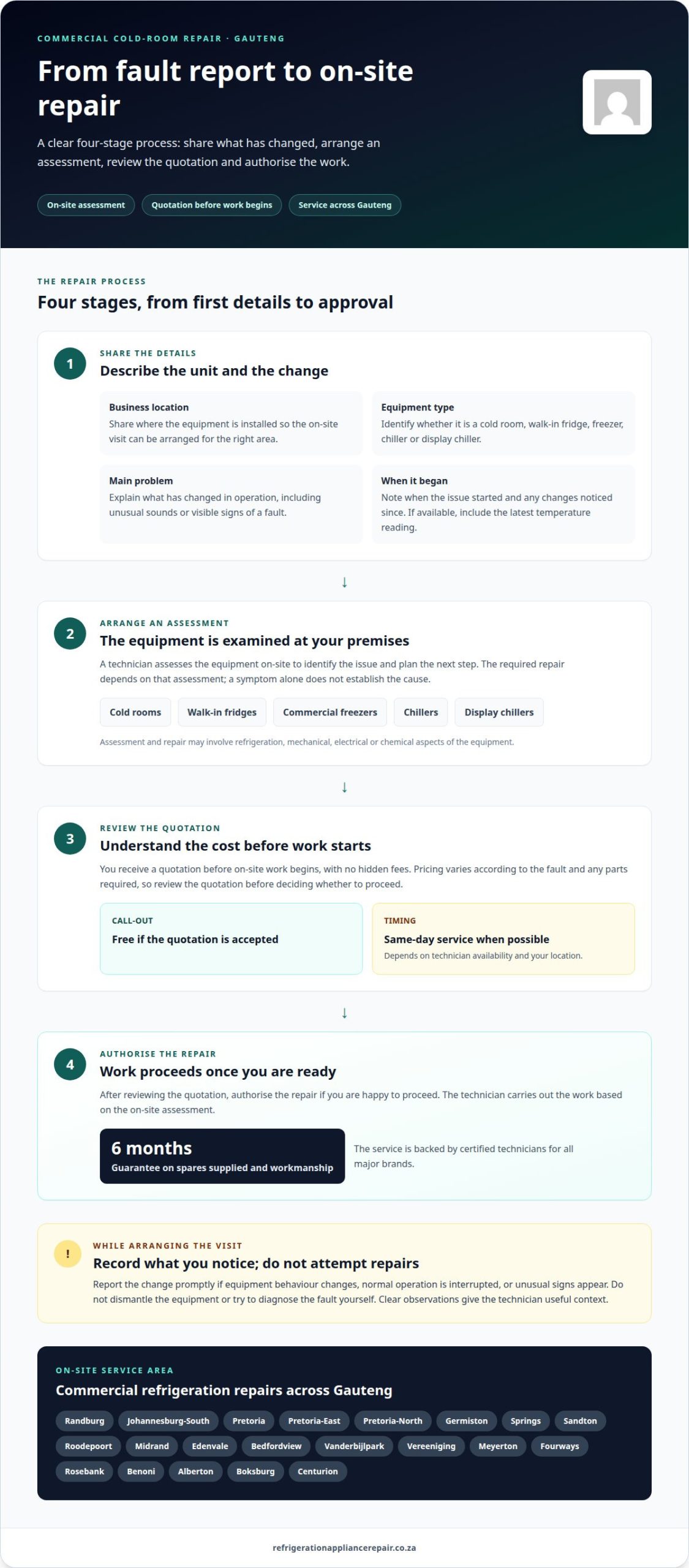
Commercial cold room repair starts with clear details and an on-site assessment at your business. Describe the equipment and issue, arrange the visit, review the quotation, then authorise the work if you are happy to proceed.

  1. Share the business location, equipment type and main problem.
  2. Arrange an on-site assessment so the equipment and fault can be examined at your premises.
  3. Review the quotation provided before work begins.
  4. Authorise the repair once you are ready to proceed.

What information helps with an on-site assessment?

Note whether the unit is a cold room, walk-in fridge or another type of commercial refrigeration equipment. Describe the main operating concern, when it began and any changes you have noticed since. Include your business location so the on-site visit can be arranged for the right area. Do not attempt repairs yourself; clear observations give the technician useful context before attending.

What to expect from timing and the quotation

Same-day service when possible, depending on technician availability and your location. Pricing varies according to the fault and any parts required. You will receive a quotation before on-site work begins, with no hidden fees, so you can decide whether to authorise the repair. Free Call-Out If Quotation Is Accepted.

On-site commercial refrigeration repairs are available across these Gauteng service areas:

RANDBURG, JOHANNESBURG-SOUTH, PRETORIA, PRETORIA-EAST, PRETORIA-NORTH, GERMISTON, SPRINGS, SANDTON, ROODEPOORT, MIDRAND, EDENVALE, BEDFORDVIEW, VANDERBIJLPARK, VEREENIGING, MEYERTON, FOURWAYS, ROSEBANK, BENONI, ALBERTON, BOKSBURG, CENTURION.

Have the equipment details and location ready to arrange an on-site cold-room repair assessment.

Choose accountable commercial cold-room repair with Access in Gauteng

Access provides on-site refrigeration repairs for commercial and industrial cold rooms across Gauteng, including in Kempton Park. The assessment takes place at your business, and the service terms are explained before work begins. For commercial cold room repair, clear communication matters: you should understand what the quotation covers and have the opportunity to authorise the proposed on-site work before it proceeds.

Access’s service is backed by Certified Technicians for All Major Brands. The commitment is simple: Quality that is Guaranted.

Clear service terms before work begins

You receive a quotation before work begins, and there are no hidden fees. Pricing varies according to the fault and any spares required, so review the quotation before deciding whether to proceed. The workmanship warranty is covered by 6 Months Guaranteed on Spares Supplied & Workmanship. This sets out the guarantee for workmanship and spares supplied alongside the proposed on-site repair.

Before authorising the work, make sure you understand the quotation and service terms. This gives your business a clear basis for approving the repair and planning around the on-site visit.

Arrange commercial cold-room repair

Need help with a commercial or industrial cold room in Gauteng? Book an on-site repair by phone, WhatsApp or through the online form. Have your business location, equipment type and a short description of the issue ready to help get the request under way.

Call or WhatsApp +2772 349 4747 or +2772 515 1248 to arrange on-site commercial refrigeration repairs.

Keep your business moving with the right next step

A refrigeration fault can put familiar routines on hold, but a clear plan helps your team move from uncertainty to action. Note what has changed, identify the affected equipment and decide who will coordinate the visit and approve the work. This gives your business a practical starting point for arranging commercial cold room repair on-site.

Access brings over 25 years worth of experience to on-site refrigeration repairs for commercial and industrial businesses in Gauteng. With the equipment details and location ready, you can make the booking process more straightforward and help the team understand what support your site needs.

Take the next step and arrange an on-site assessment for your business. Arrange on-site commercial cold-room repair in Gauteng and get a clear path towards resolving the disruption. A considered response now can help your team return to its normal working rhythm with confidence.

Frequently Asked Questions

Can you repair a commercial cold room on-site in Gauteng?

Yes. Access Refrigeration & Appliance Repairs carries out commercial cold room repair on-site at businesses across Gauteng, including Johannesburg and Pretoria. The technician assesses the equipment where it operates, whether it is a cold room serving a restaurant or a walk-in fridge at a shop. Share the business address and unit type when arranging the visit.

Do you offer same-day commercial cold-room repair?

Same-day service when possible, depending on technician availability and your location. If your business in Sandton, Boksburg or another Gauteng area has a refrigeration issue, share the location and what has changed when arranging on-site service. This helps the team understand the request and consider the visit in context. Same-day timing is not guaranteed for every booking.

Is the call-out free for a commercial cold-room repair?

A quotation is provided before on-site work begins, so you can review the proposed repair and decide whether to authorise it. Have the equipment details and business location ready when arranging the on-site assessment.

Can a cold-room refrigerant leak be repaired and regassed?

Yes. Cold room not cooling repair may involve finding and fixing a refrigerant leak. Refrigeration regassing is available after the leak has been repaired. A technician assesses the unit on-site to understand the issue and determine the appropriate repair before regassing. Do not treat regassing alone as a fix for a suspected leak. When booking, describe any changes you have noticed and identify the equipment, such as a cold room or walk-in freezer.

Do you provide emergency commercial cold-room repair services?

Access provides emergency repair services for urgent appliance breakdowns, especially when refrigeration equipment is involved. If a commercial cold room or walk-in fridge has stopped operating as expected, explain the urgency and your Gauteng business location when arranging on-site help. The team can use those details to understand the situation and organise an on-site response. Emergency service does not mean every request has a guaranteed arrival time.

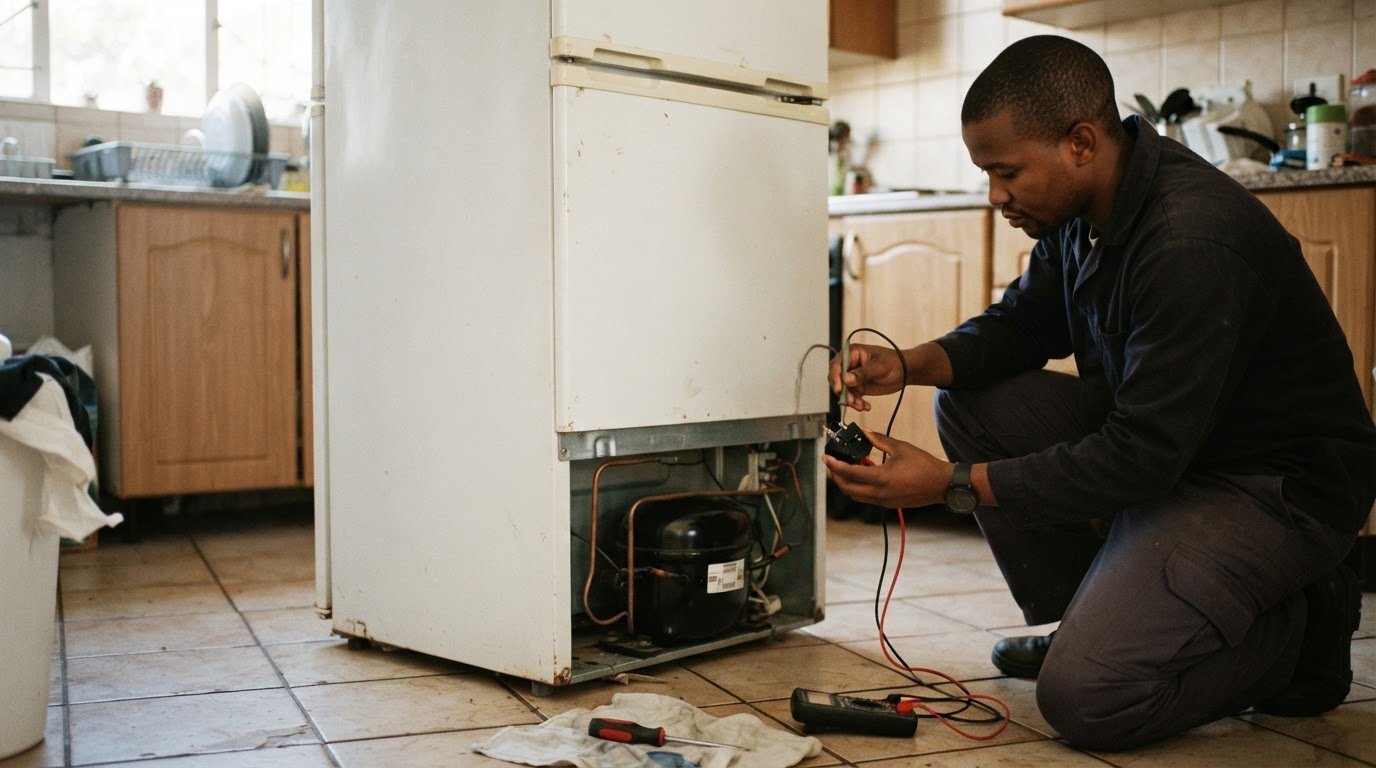
A technician checks a fridge’s compressor start relay during a Johannesburg home repair.
Samsung Fridge repair in Johannesburg for cooling and electrical faults

A fridge that runs but won’t stay cold may have a cooling, temperature-control or airflow fault; electrical problems can also stop it working properly. Fridge repair in Johannesburg can address these issues in household and commercial fridges and freezers, depending on the fault and the appliance’s condition. The first step is identifying what has changed, from warm food and uneven temperatures to unusual noises or a unit that won’t power on.

It’s stressful when a fridge or freezer can’t keep food at a safe temperature, especially when you rely on it every day. Similar symptoms can have different causes: restricted airflow, a faulty thermostat or a power issue may all affect cooling.

This article covers common cooling and electrical faults, what a repair assessment involves, and what can affect the work required. You’ll also learn what to note before arranging a repair, so you can describe the problem clearly and know what to expect next.

Key Takeaways

  • Note whether the fridge is warm, making unusual noises or failing to switch on; these symptoms help distinguish cooling faults from electrical problems.
  • Domestic fridges and commercial refrigeration equipment serve different needs, so the appliance type and how it’s used matter when assessing a fault.
  • Check for blocked airflow, poor door sealing and uneven temperatures, as these can help explain why cooling is inconsistent.
  • Share what the appliance is doing and when the problem started to help guide the repair assessment.

Common fridge and freezer faults

A fridge can run continuously yet leave milk warm or vegetables limp. A damaged door seal, blocked vents or crowded shelves can disrupt cold-air circulation. Frost building up inside a freezer may point to a defrost or airflow problem. Water beneath the drawers can result from a blocked drain, while clicking without starting can indicate an electrical or starting fault. These symptoms help guide diagnosis, but they don’t identify the failed part on their own.

Do Johannesburg fridge repair services offer same-day or emergency repairs? Same-day repair services are advertised in Johannesburg, but emergency response depends on the service and its schedule. When booking, explain whether the fridge has stopped cooling completely or the freezer is also affected. A unit that has lost power needs a different assessment from one that runs but stays warm.

Which fridge brands do Johannesburg repair technicians service? Brand coverage varies with the technician’s experience, appliance model and parts required. Give the make and model from the label inside the fridge or near its door. That information helps identify the appliance before a visit.

Do fridge repair companies in Johannesburg offer warranties on parts and labour? Check what the guarantee covers and how long it lasts. Access Refrigeration & Appliance Repairs provides a six-month guarantee on supplied spares and workmanship. Keep the repair documentation with the appliance details.

How can I find a reputable, qualified fridge repair technician in Johannesburg? Look for a clear diagnostic process, an itemised quotation and written terms for parts and workmanship. The technician should explain the fault found, the proposed repair and any parts involved. Before agreeing to the work, make sure you understand its scope.

What should I check before booking a fridge repair in Johannesburg? Note the make and model, when the fault started, and whether the lights, motor or display still work. Safely check the plug and household socket, and report any burning smell or repeated tripping. Don’t dismantle electrical components.

Do technicians service Sandton, Randburg and Soweto? Coverage depends on the service area; give the suburb and nearest landmark when arranging a visit. This helps establish whether the address falls within the Johannesburg operating area.

Domestic and commercial refrigeration

A household fridge usually stores food for one family, while commercial equipment supports daily trading. A restaurant may rely on a preparation fridge, display cabinet and freezer at once. A small shop might use a drinks cooler beside its food-storage fridge. Each unit has a different role, so describe what it stores and how often staff open it.

Commercial equipment can face heavier use than a domestic appliance. Frequent door openings, regular restocking and warm kitchens can affect how consistently a unit cools. A display fridge in a busy shop also has different demands from a household fridge that stays closed for longer periods. These usage details help distinguish an equipment fault from operating conditions.

  • Domestic fridges: note whether the issue affects the fridge compartment, freezer compartment or both.
  • Chest and upright freezers: describe the stored goods and whether frost or temperature changes are visible.
  • Display cabinets: report which section or shelf appears affected, and whether the problem continues during quieter periods.
  • Cold rooms: explain how the space is used and whether the fault affects the whole room or one area.

Before arranging an assessment, make a simple equipment list. Include each appliance’s make, model and location, such as “upright freezer in the storeroom”. At a commercial site, note when the problem appears: during restocking, after repeated door use, or throughout the day. These observations help the technician understand the operating environment and assess the right unit.

Keep access clear around the appliance and its controls. For a cold room, clear the entrance and identify any separate cooling equipment nearby. In a shop or kitchen, tell staff which unit needs attention so they can explain its normal use. Avoid moving stored goods into another unit if that would block its airflow.

For equipment serving a business, record the affected unit and its role before arranging refrigeration repair. Clear details help focus the assessment on the appliance, its workload and the areas affected.

Samsung Fridge repair in Johannesburg for cooling and electrical faults

Fridge cooling and temperature problems

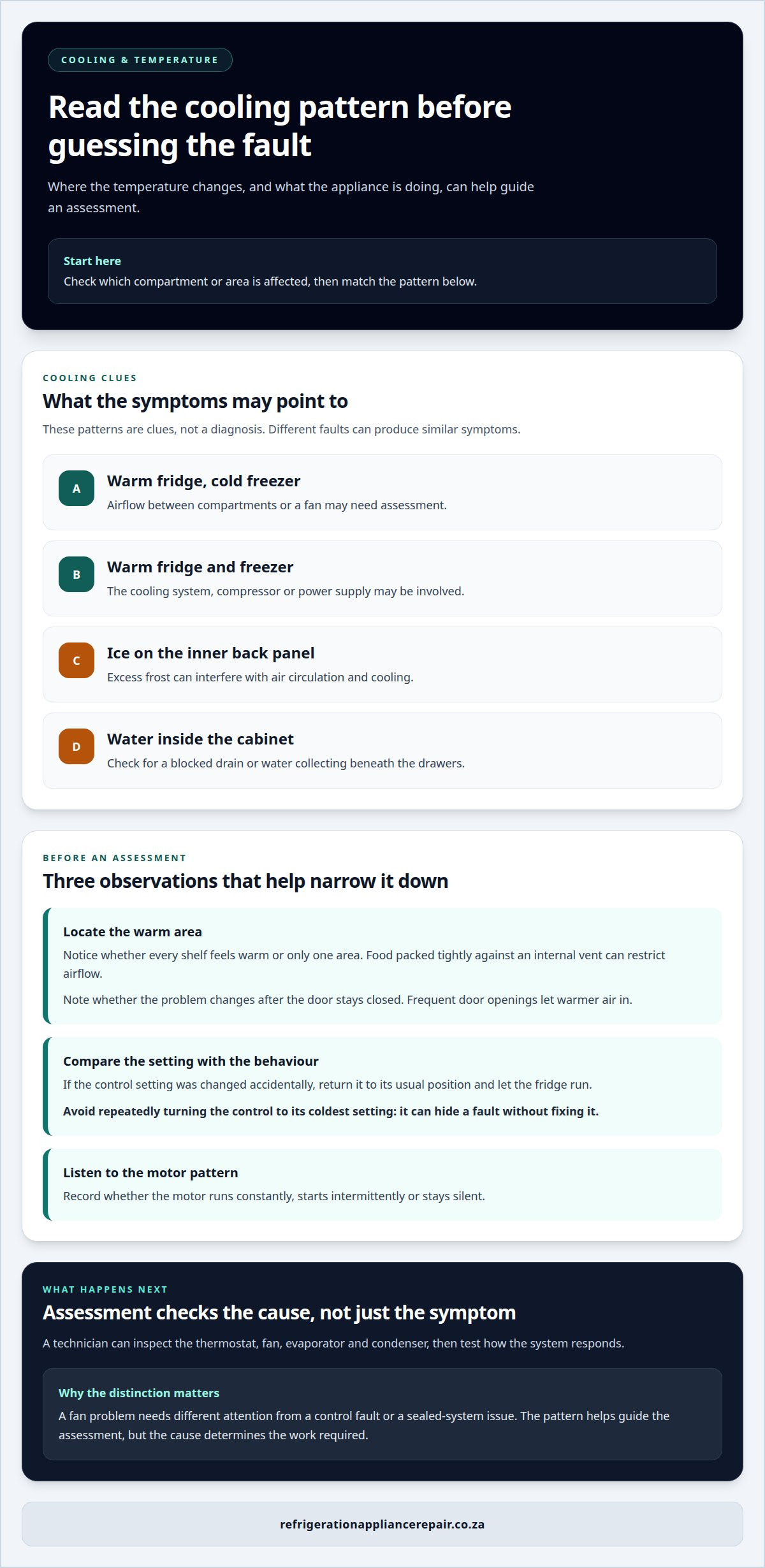
A fridge that cools unevenly needs a closer look than its display setting. Check whether every shelf feels warm or only one area does. Food packed tightly against an internal vent can restrict airflow, while frequent door openings let warmer air in. Note which compartment is affected and whether the problem changes after the door stays closed.

Next, compare the control setting with the fridge’s actual behaviour. If the setting was changed accidentally, return it to its usual position and let the fridge run. Don’t keep turning the control to its coldest setting: that can hide a fault without fixing it. Record whether the motor runs constantly, starts intermittently or stays silent.

  • Warm fridge, cold freezer: airflow between compartments or a fan may need assessment.
  • Warm fridge and freezer: the cooling system, compressor or power supply may be involved.
  • Ice on the inner back panel: excess frost can interfere with air circulation and cooling.
  • Water inside the cabinet: inspect for a blocked drain or water collecting beneath drawers.

These patterns are clues, not a diagnosis. A technician can inspect the thermostat, fan, evaporator and condenser, then test how the system responds. The cause matters: a fan problem needs different attention from a control fault or sealed-system issue. Share the symptoms and any changes you noticed after adjusting the controls.

Before arranging fridge repair in Johannesburg, clear items away from the internal vents and check that containers aren’t stopping the door from closing. Look for a visible gap around the seal, but don’t remove panels or handle wiring. Keep the make and model handy, and note when cooling changed. These details help focus the assessment instead of relying on a single warm shelf.

Fridge electrical issues

Does the fridge have no lights, no display and no motor sound? Start by checking the plug and wall socket. See whether another appliance works from that socket, then inspect the fridge’s power lead for visible damage. Don’t touch exposed wires or remove electrical covers. If the socket works but the fridge stays off, the fault may involve its internal wiring, control board or power components.

A fridge that repeatedly switches off may have a different fault. A damaged thermostat may interrupt operation, while a failing start relay can prevent the compressor from starting. Listen for repeated clicking, note whether the interior light stays on, and record when the appliance stops. These details help distinguish a control fault from an interruption in the household power supply.

  • No interior light: check the socket and plug, then report whether the display also remains blank.
  • Repeated clicking: note how often it happens and whether the compressor starts afterwards.
  • Power trips when switched on: stop resetting the circuit and arrange an assessment.
  • Burning smell or visible sparks: keep away from the appliance and seek professional attention.

Electrical diagnosis can involve the supply connection, wiring, thermostat, start relay, control board and compressor circuit. A technician tests relevant components to locate the interruption rather than replacing parts by guesswork. Explain what happened just before the fault, such as a power cut, a socket change or a sudden shutdown.

Before arranging a visit, note the make and model, the symptoms, and whether the socket powers another appliance. Keep the fridge accessible, but leave internal panels and wiring untouched. If the circuit trips or you notice a burning smell, don’t continue switching the fridge on. For an electrical fault affecting your fridge, arrange a fridge repair assessment and share those observations.

Access Refrigeration & Appliance Repairs: Fridge Repairs

Access Refrigeration & Appliance Repairs carries out on-site fridge repairs for cooling and electrical faults. Arrange a repair if your fridge runs without cooling, switches off unexpectedly or won’t power on. Share the make and model, the symptoms and when they began to help the technician assess the problem.

The repair process starts with identifying the fault and explaining the proposed work. If you accept the quotation, the call-out is free. Repairs are backed by a six-month guarantee on supplied spares and workmanship. The service also covers freezer repairs if a separate freezer develops a fault.

For a fridge that isn’t cooling or has an electrical fault, contact Access Refrigeration & Appliance Repairs or visit refrigerationappliancerepair.co.za.

Take the next step towards a working fridge

A clear account of what the appliance is doing gives the repair assessment a useful starting point. Before arranging help, note when the fault began, whether it changes and which compartments are affected. Include the make and model, along with any clicking, shutdowns or unusual smells. For fridge repair in Johannesburg, these observations help explain the problem without relying on guesswork.

Access Refrigeration & Appliance Repairs handles fridge, freezer and dishwasher repairs. Choose the service for the appliance causing trouble, and describe the symptoms when you get in touch. If the fault involves a fridge’s cooling or electrical system, include what you’ve observed and avoid opening electrical panels.

Ready to discuss the repair? Contact Access Refrigeration & Appliance Repairs and share the appliance details. A practical first step can make it easier to get the right fault assessed and move towards a working fridge again.

Frequently Asked Questions

Which fridge repair companies serve Johannesburg and nearby suburbs?

Access Refrigeration & Appliance Repairs provides on-site appliance and refrigeration repairs in Johannesburg and nearby areas. Its coverage includes Sandton, Randburg, Alberton, Edenvale, Benoni, Boksburg, Centurion, Roodepoort, Germiston, Kempton Park, Springs and Midrand, as well as Pretoria, Pretoria-east, Pretoria-North, Waterkloof, Vanderbijlpark, Vereeniging and Meyerton. Give your suburb and appliance type when arranging a visit.

What are common signs a fridge needs professional repair rather than troubleshooting?

Arrange a professional repair if a basic adjustment doesn’t fix the problem, or the fault returns after the fridge briefly works normally. Repeated circuit trips, a damaged power lead or a burning smell also need professional attention. Internal wiring and cooling-system work require specialist assessment. Don’t remove panels or attempt refrigerant work; note the symptoms and any simple checks you’ve tried.