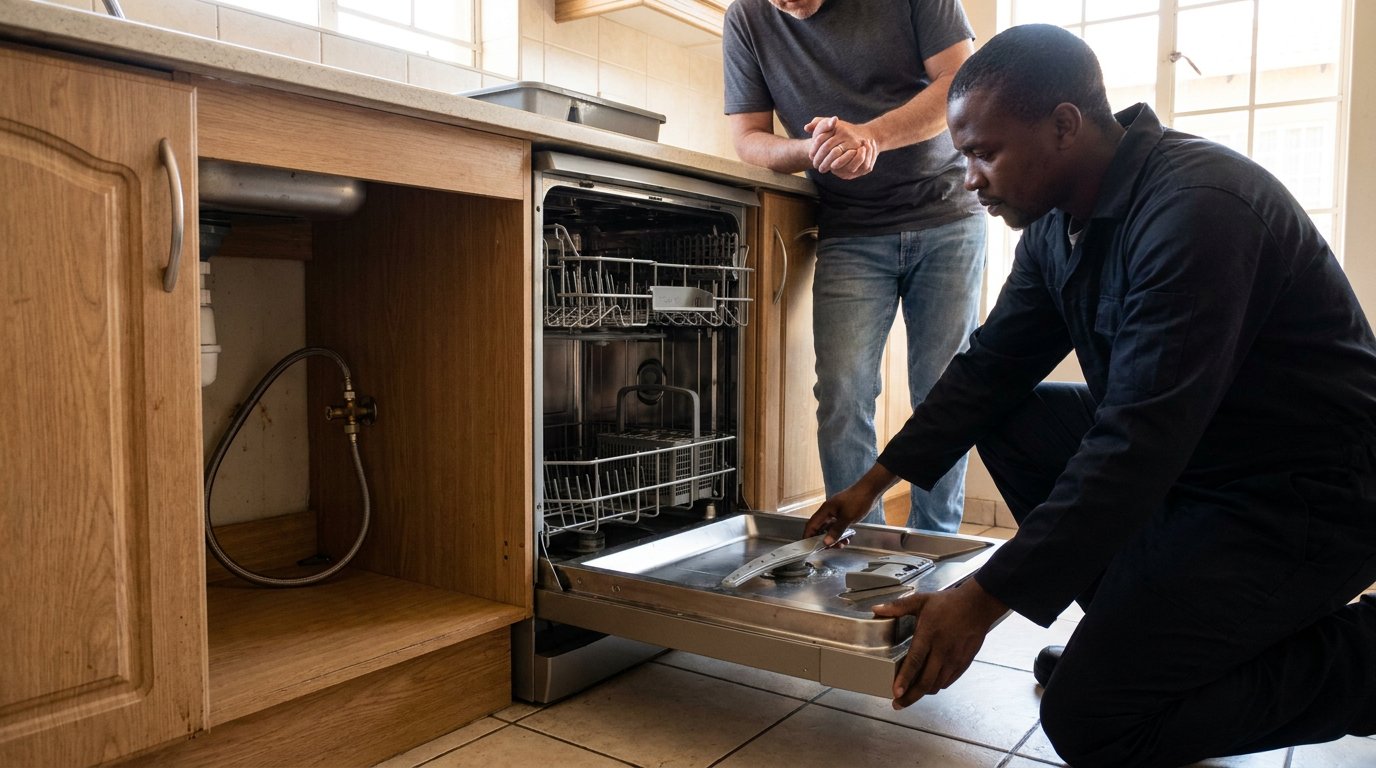
Dishwasher Repair: Checks to Make Before Calling a Professional
A dishwasher that won’t start or clean properly may not need a technician straight away. Before arranging dishwasher repair, check that the door is fully closed, a cycle is selected and the water supply is on. These simple checks can reveal an easy fix or help you describe the problem clearly.
A faulty dishwasher can quickly disrupt household routines, especially when dishes pile up and the cause isn’t obvious. Rule out basic issues first, but don’t take the machine apart or ignore signs of a leak, burning smell or unusual noise.
This guide covers practical checks, common symptoms and when to stop troubleshooting. You’ll also learn what to note before booking a repair, making the next step clearer and helping you avoid turning a small problem into a bigger one.
Key Takeaways
- Match the symptom, such as poor cleaning or water left inside, to the likely area that needs attention.
- Use simple checks to narrow down the cause, but avoid dismantling parts if the fault is unclear.
- Note when the problem occurs and any unusual sounds or changes in performance to help explain the fault.
- Arrange professional attention when basic checks don’t resolve the issue or the appliance shows signs of a more serious fault.
Dishwasher repair
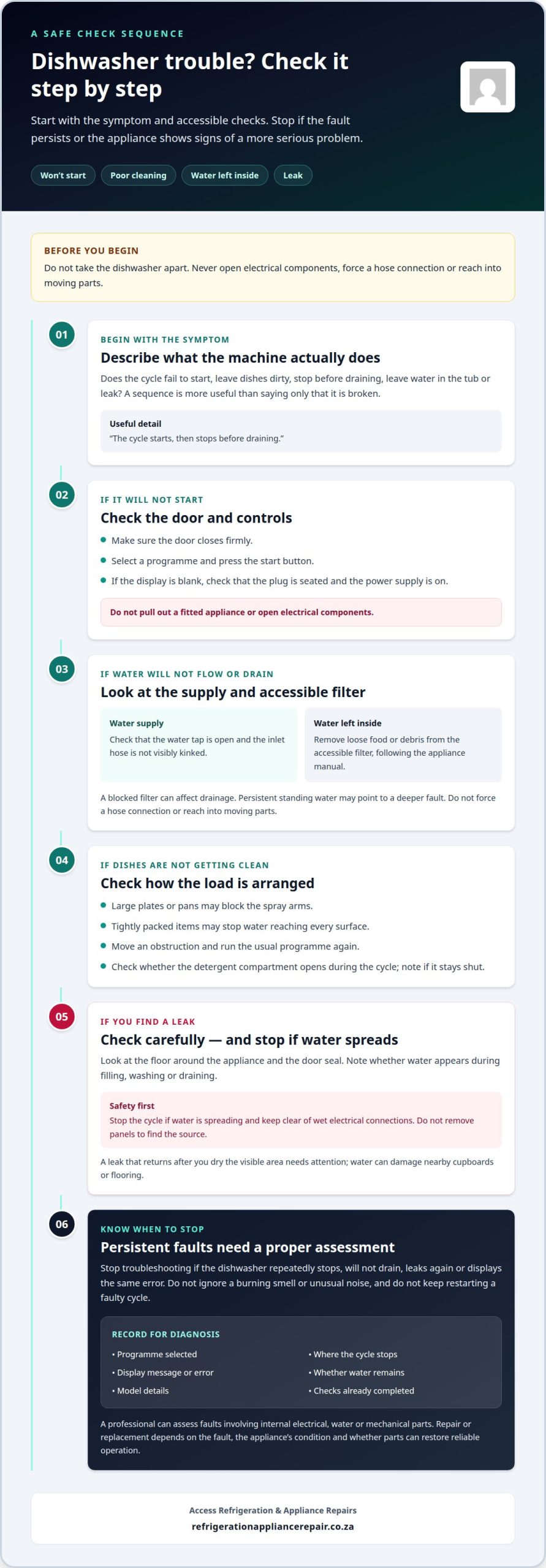
Dishwasher faults can include a cycle that won’t start, dirty dishes, water left in the tub or a leak. Start with the symptom and check simple causes before deciding whether the appliance needs professional attention. A clear description, such as “the cycle starts, then stops before draining”, is more useful than saying only that the machine is broken.
Start with the controls. Check that the door closes firmly, a programme is selected and the start button has been pressed. If the display is blank, check that the dishwasher’s plug is seated and its power supply is on. Don’t pull out a fitted appliance or open electrical components. If the controls respond but the cycle won’t begin, note what appears on the display and when.
Next, check the water supply and drainage. Make sure the appliance’s water tap is open and the inlet hose is not visibly kinked. If water remains after a cycle, remove loose food or debris from the accessible filter, following the appliance manual. A blocked filter can affect drainage, but persistent standing water may indicate a deeper fault. Don’t force a hose connection or reach into moving parts.
If dishes aren’t getting clean, inspect the load before assuming a component has failed. Large plates or pans can block the spray arms, and tightly packed items may stop water reaching every surface. Move an obstructing item and run the usual programme again. Check whether the detergent compartment opens during the cycle, too. If it stays shut, note that detail: it can help distinguish a loading issue from a possible dispenser problem.
Check leaks carefully. Look at the floor around the appliance and the door seal, and note whether water appears during filling, washing or draining. Stop the cycle if water is spreading, and keep clear of wet electrical connections. Don’t remove panels to find the source. A leak that returns after you dry the visible area needs attention, as water can damage nearby cupboards or flooring.
What the wider figures tell you
Dishwasher efficiency standards are a separate topic from diagnosing a fault. The current ENERGY STAR criteria for dishwashers became effective July 19, 2023. ENERGY STAR is a United States programme, so this date describes its criteria, not a South African repair rule. For a Johannesburg household, the practical repair decision still starts with the appliance’s actual symptom and condition.
Use figures about appliance ownership carefully, too. Of the 80 million U.S. households with a dishwasher, 16 million (almost 20%) did not use it in 2015, according to the U.S. Energy Information Administration. That historical United States statistic does not show how often South African households use dishwashers today. It does underline why a fault may go unnoticed: a machine used only occasionally can sit idle between cycles.
When to stop troubleshooting
Stop troubleshooting after basic checks if the dishwasher repeatedly stops, won’t drain, leaks again or displays the same error. Restarting a faulty cycle repeatedly won’t identify the cause. Note the programme, where it stops, any message on the display and whether water remains. For example, “the quick programme fills, then stops before washing” gives a clearer starting point for diagnosis.
A professional assessment is useful when the problem persists after accessible checks or involves internal electrical, water or mechanical parts. A technician can inspect the appliance, identify the faulty area and explain the repair needed. Have the model details and a short fault history ready. These details help focus the visit on the issue, rather than repeating checks you have already completed.
Repair or replacement depends on the nature of the fault, the condition of the appliance and whether the required parts can restore reliable operation. A single blocked filter is different from a recurring leak or a machine that no longer completes its cycle. Record what you observed, avoid dismantling the dishwasher, and use those details to decide the next step with confidence.
Access Refrigeration & Appliance Repairs: Fridge Repairs
Access Refrigeration & Appliance Repairs provides dishwasher repairs when basic checks haven’t resolved a fault or the machine keeps stopping, leaking or failing to drain. The service includes hands-on diagnosis. Explain the symptoms and checks you have already made to help the technician investigate the problem.
Before arranging a repair, note when the problem occurs, what the controls show and whether water remains after the cycle. These details give the technician a clear starting point. Access also repairs fridges, freezers and washing machines, helping with common household appliance faults. For business refrigeration issues, see commercial cold room repair in Gauteng.
If your dishwasher still isn’t working properly, contact Access Refrigeration & Appliance Repairs or visit refrigerationappliancerepair.co.za.
Get your dishwasher back into your routine
If the fault persists after basic checks, the next step is a clear diagnosis. Professional dishwasher repair can identify whether the problem involves a component, water flow or another part of the appliance. Knowing the cause helps you decide what to do next, rather than repeatedly restarting a cycle that still fails.
Access Refrigeration & Appliance Repairs handles dishwasher, fridge and freezer repairs. If another appliance at home is also giving trouble, mention it when arranging service. For air conditioning problems, see this guide to aircon repair in Johannesburg. Have the model details and a short description of the fault ready so you can explain the issue clearly.
Choose the next step that suits your household and get the problem assessed. Contact Access Refrigeration & Appliance Repairs to discuss your appliance fault, and move towards a working kitchen again.