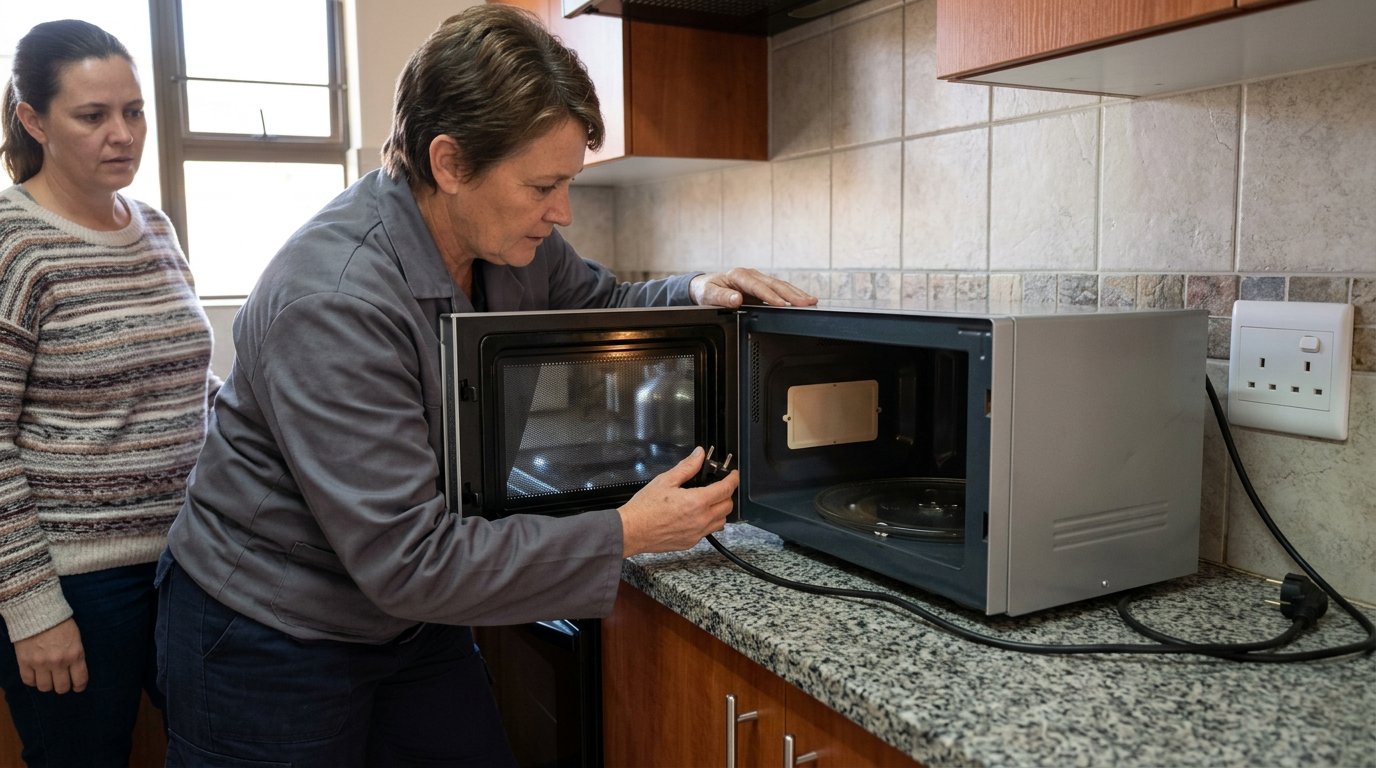
Oven Repair Near You: Safe Troubleshooting Advice
A microwave that stops heating, makes unusual noises or loses power needs a proper diagnosis before anyone can choose the right repair. If you’re searching for microwave repair near you, note what the appliance does and when the problem occurs. Stop using it if you notice smoke, sparks or a burning smell.
A breakdown can disrupt meals and leave you unsure whether the fault is simple or needs a technician. Don’t open the casing or work on internal components. Describing the symptoms clearly is a safer, more useful first step.
This guide explains how microwave faults are assessed, which repairs and genuine manufacturer parts may be involved, and what to look for in a repair guarantee. You’ll also learn which observations can help with diagnosis, what can affect the repair quote, and when professional help is the sensible next move.
Key Takeaways
- Record when the microwave fault happens and what you notice; these details can help narrow down the cause.
- Learn why the correct manufacturer part matters and how the repairer identifies a suitable replacement.
- Understand the difference between a fault diagnosis and the repair itself before approving the work.
- Check which supplied parts and workmanship a repair guarantee covers, and keep the terms for reference.
Fault diagnosis
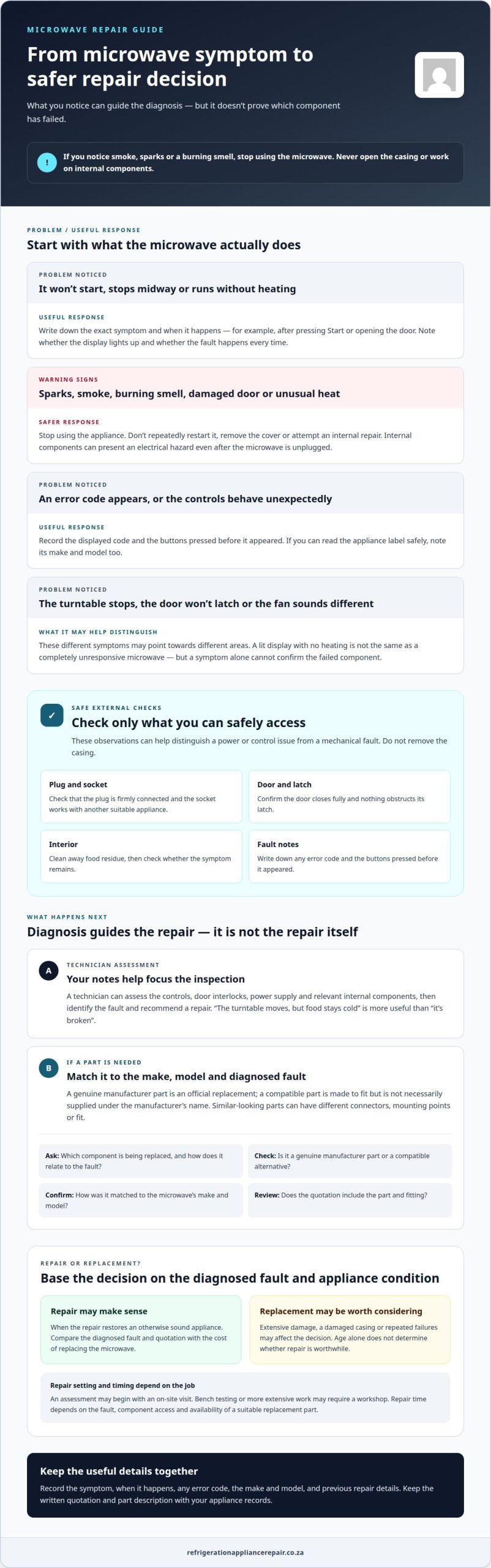
A useful diagnosis starts with the exact symptom, not a guess about the faulty part. Note whether the microwave won’t start, runs without heating, stops midway or displays an error code. Record when the fault appears, such as after pressing Start or opening the door. If you can read the appliance label safely, include its make and model.
Microwave safety risks need prompt attention. Stop using the appliance if you see sparks or smoke, smell burning, notice a damaged door or feel unusual heat around the casing. Don’t remove the cover: internal components can present an electrical hazard, even after the microwave is unplugged.
Before arranging professional diagnosis, make only safe external checks:
- Check that the plug is firmly connected and the socket works with another suitable appliance.
- Confirm the door closes fully and nothing obstructs its latch.
- Clean food residue from the interior, then check whether the symptom remains.
- Write down any displayed code and the buttons pressed before it appeared.
These observations can help distinguish a power or control issue from a mechanical fault. A lit display with no heating, for instance, differs from a completely unresponsive appliance. A turntable that stops, a door that won’t latch or a fan that sounds different may each point to a different area. The symptom alone doesn’t prove which component has failed.
A technician can assess the controls, door interlocks, power supply and relevant internal components. They’ll use your description to guide the inspection, identify the fault and recommend a repair. Be specific: “the turntable moves, but food stays cold” gives more useful information than “it’s broken”. Don’t repeatedly restart a microwave that sparks or smells burnt. Clear notes help focus the assessment and base the repair decision on the fault.
Genuine manufacturer parts
A replacement part must match the microwave’s make and model, not merely look similar. The model label helps identify the appliance version, while a part number can narrow down the component needed. Share these details when arranging a repair if you can access them without moving or opening the microwave.
A genuine manufacturer part is an official replacement supplied for that appliance. A compatible part is made to fit, but isn’t necessarily supplied under the microwave manufacturer’s name. The repairer needs to establish that the part is suitable for the specific model and will fit and function correctly.
For example, door latches, control panels and turntable motors can have different specifications across models from the same brand. A similar-looking part may have a different connector, mounting point or fit. The technician should match the replacement to the appliance details and diagnosed fault, not choose by appearance alone.
Before approving a repair, ask the technician to explain the proposed part type. Useful details include:
- The component being replaced and how it relates to the diagnosed fault.
- Whether it’s a genuine manufacturer part or a compatible alternative.
- How the part is matched to the microwave’s make and model.
- Whether the repair quote includes the replacement part and fitting.
Keep the written quotation and any part description with your appliance records. If the microwave has been repaired before, share the details: an earlier component replacement may help explain recurring symptoms. Don’t try to fit internal parts yourself, as opening the casing can expose hazardous components.
For a fault that needs a correctly matched replacement and professional fitting, microwave repair support can be the next practical step. Clear model details and a description of the problem help the repairer assess the job and explain the proposed part before work proceeds.
Microwave fault repairs
Once the fault is diagnosed, the repair plan depends on the failed component and the microwave’s condition. The work setting, time required and whether repair is worthwhile also matter.
Microwave repairs may start with an on-site visit, where the technician assesses the appliance and identifies the fault. If the work requires bench testing or more extensive attention, the microwave may need to go to a workshop. The fault and checks required determine the appropriate setting.
Weighing repair against replacement
Is an older microwave worth repairing? Compare the diagnosed fault, the condition of the door and controls, and the repair quotation with the cost of replacing the appliance. A damaged casing or repeated failures may affect the decision. Repair can make sense when it restores an otherwise sound appliance; extensive damage may point towards replacement. Decide based on the specific fault, not age alone.
Understanding repair times
How long does microwave repair usually take? It depends on the fault, how accessible the component is and whether a suitable replacement part is available. A straightforward adjustment takes different work from replacing a control component or carrying out further testing. After inspection, the technician can explain the steps, including any testing needed after fitting a part. Ask what work is planned and what could extend it.
Preparing the microwave for a technician
Before the appointment, unplug the microwave if the plug is safely accessible and there’s no immediate hazard. Clear the counter and remove food, the glass turntable and loose accessories. Keep the model label accessible and note the symptom, such as a display that lights without heating. Share any error code or previous repair details. Don’t remove the casing or attempt internal repairs.
Which brands do local repair technicians service? Technicians may work on different manufacturers’ models, but the make and model help identify the right repair approach and replacement part. Read the appliance label and provide those details with your fault description. A microwave that runs without heating, for example, needs a different assessment from one that won’t start. The brand helps focus the inspection, but the observed fault guides the repair.
Repair guarantees
A repair guarantee explains what support applies after the work is completed. Check the written terms for the repair covered, the guarantee period, and whether it includes parts, workmanship or both. For example, a guarantee covering a replaced door latch doesn’t necessarily cover every microwave component. Clear terms help you understand what to do if the same fault returns.
Access Refrigeration & Appliance Repairs provides a six-month guarantee on supplied spares and workmanship. It covers the replacement parts supplied and the work carried out, not every possible fault affecting the appliance. Keep the quotation and repair paperwork together so you can easily identify the covered work and guarantee period.
Before approving a repair, look for these details in the quote or guarantee terms:
- Which microwave fault and repair work the guarantee relates to.
- Whether the replacement part is included in the cover.
- When the guarantee period begins and how long it lasts.
- How to report a problem connected to the completed repair.
Keep the invoice, the technician’s description of the repair and any part details. If the microwave develops the same symptom, describe what has changed and refer to the original repair record. A new fault may involve a different component, so the symptoms and earlier work can help distinguish a recurring issue from a separate problem.
Confirm the call-out arrangement before work starts. The call-out is free when you accept the quotation. Review the proposed repair, its scope and the parts being supplied. Don’t assume the guarantee covers unrelated damage, a later fault or parts that weren’t supplied as part of the repair.
For microwave repair with cover on supplied spares and workmanship, request a repair quotation. Keep the written terms with your appliance records, and use them if a question arises about the completed work.
Access Refrigeration & Appliance Repairs: Fridge Repairs
Access Refrigeration & Appliance Repairs is a practical next step when a fridge fault disrupts food storage or a household appliance stops working. Its fridge repairs address refrigeration problems, while dishwasher, freezer and washing machine repairs cover other common breakdowns.
For a fridge that isn’t cooling properly, note the symptoms and when they began before arranging help. For a dishwasher, freezer or washing machine fault, describe what the appliance does and any unusual sounds or signs. These details help explain the problem clearly and support a focused repair assessment.
For microwave repairs in Johannesburg, Pretoria and surrounding areas, contact Access Refrigeration & Appliance Repairs and describe the fault.
Get your microwave working safely again
A fault that keeps returning can disrupt everyday routines and make a microwave difficult to rely on. Instead of attempting internal repairs, use the symptoms you’ve observed to arrange a professional assessment. Sharing the make, model and behaviour helps turn an uncertain problem into a focused repair enquiry.
If you need microwave repairs nearby, Access Refrigeration & Appliance Repairs can assess the fault and carry out the necessary repair. The team also repairs fridges, freezers and dishwashers when other household appliances need attention.
Contact Access Refrigeration & Appliance Repairs with the appliance details and a short description of what’s happening. Arrange microwave repair support and take a practical step towards getting your kitchen routine back on track.
Frequently Asked Questions
How do I find a reputable microwave repair technician near me?
Choose a technician who explains the fault, proposed work and parts before you approve a repair. Access Refrigeration & Appliance Repairs provides on-site microwave repairs in Johannesburg, Pretoria, Sandton, Alberton, Edenvale, Benoni, Boksburg, Centurion, Roodepoort, Germiston, Vanderbijlpark, Vereeniging, Meyerton, Randburg, Kempton Park, Springs and Midrand. Share the microwave’s make, model and symptoms, then request a clear quotation.
What warranty do microwave repair services provide on parts and labour?
Access Refrigeration & Appliance Repairs provides a six-month guarantee on supplied replacement parts and workmanship. It covers the parts supplied and work carried out, not every component or a separate later fault. Keep your quotation and invoice. If the same issue returns, describe the symptoms and refer to the repair record when contacting the business.
Are microwave repairs covered by warranty or consumer protection laws in South Africa?
The repair service includes a six-month guarantee on supplied replacement parts and workmanship. It doesn’t cover every possible fault affecting the microwave.